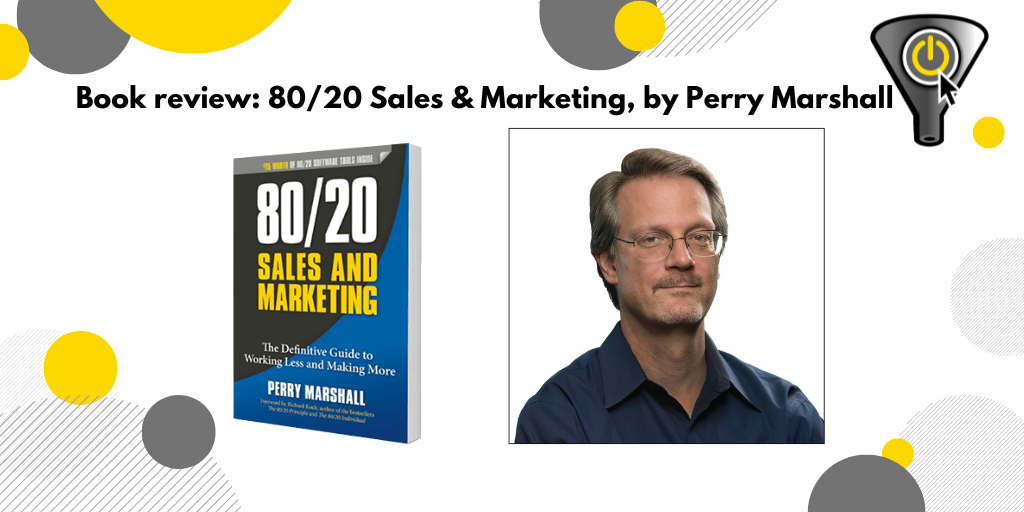
Click here to listen to my review of the book
80/20 Sales and Marketing

A show for data-based marketers
digital advertising tools and strategies
Click here to listen to my review of the book

It’s the middle of summer when I’m recording this; a time we don a pair of shades, a beach towel and a good book. Funnel Reboot usually shares talks with marketing book authors, but for this show I’m going to share some reads that go a little farther afield.
Come along with me through six books that are all amazing. The subjects range between business, humanities, technology and science fiction.
Chapter Timestamps
0:00:00 Intro
00:01:44 The Discoverers
00:12:43 Blindsight
00:19:05 How Big Things Get Done
00:24:12 Private Truths, Public Lies
00:27:41 Seveneves
00:30:01 Other SF recommendations
00:31:00 Earth Abides
00:34:57 conclusion
Books reviewed:
Other references:
Thinking Fast & Slow, by Daniel Kahneman
project Hail Mary by Andy Weir

Those of you who know me outside of this podcast, know that if I’m doing anything that involves advertising, whether it be in a classroom or a consulting setting, I think of ads as a complicated puzzle that is never fully solved. While it may not have a predictable outcome, there are a few key principles about it that are always true.
I’ve picked up these lessons one at a time, either by studying competitors or through the brands that entrusted me to run their ads—sometimes through painful trial and error. The models and principles that emerge from this process become a valuable piece of baseline knowledge, allowing you to make case-by-case decisions.
However, it’s hard to pass these insights along to others. They’re often too abstract, and the examples become stale and dated as campaigns retire.
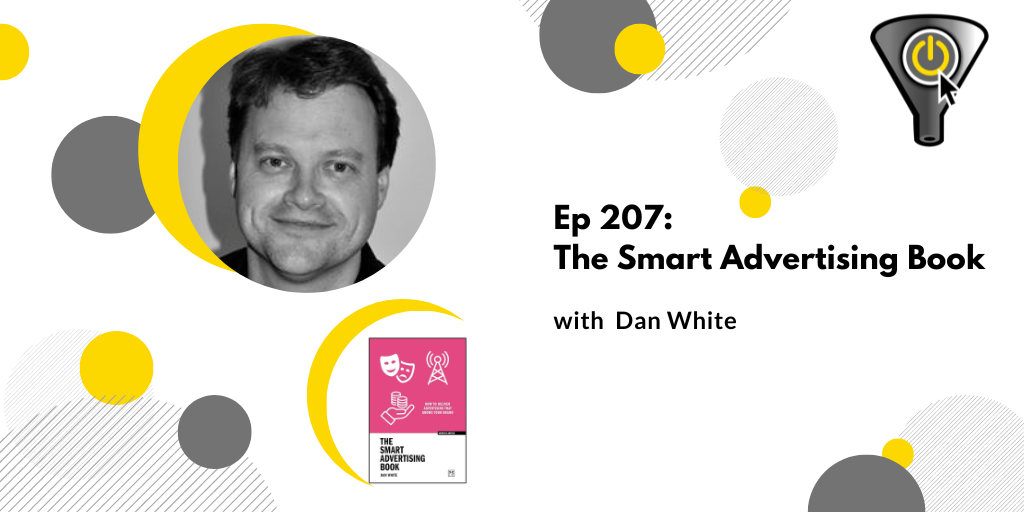
Does this mean anyone wanting to adopt this perspective on advertising must go through the same process I did? Not necessarily. Thanks to someone with a gift for brevity and illustration, these principles have been distilled into a book.
As I leaf through its pages, I’m delighted to see many concepts I’ve known given clear shape and an easy-to-remember form.
Our guest graduated from Cambridge University with a Masters of Arts. He has worked in marketing, market research and brand consultancy for 30 years. He uses imaginative visuals to bring marketing concepts to life.
He’s one of the nicest authors I’ve had on, and he’s back on this show for a third time. Let’s go to England to speak with Dan White.
0:00:00 Intro
00:02:27 Welcome Dan
00:04:40 Oldest known advertisement
00:09:18 Uber’s clever transit ad
00:11:15 Positive and negative impacts of ads
00:22:47 using advertising to build brand asset
00:23:49 PSA
00:30:46 Many ways ads can tell a story
00:33:19 How brain perceives messages
00:37:43 Learning about ads through metaphor
00:45:45 Getting the book or contacting Dan
People, products or concepts mentioned in the show:
Dan on LinkedIn
Dan White’s Smart Advertising Book
Dan was previously on In Episode 166 and Episode 109
FMCG – Fast Moving Consumer Goods (packaged foods, beverages, snacks)

Episode 196
There’s something we take for granted these days, something that wasn’t even possible a short while ago. Let’s go back to 2008, to the first iPhone, the 3G. What you could send & receive with one, if you could afford the data plan, was restricted to voice, text & small images. That’s because at the time, the cellular networks could transmit at around a third of a Megabyte per second, which went up to 2Mb/second when 3G was fully available. Then LTE/4G started becoming available in North America, reaching 97 percent by 2013. With those data speeds, you could watch brief standard definition videos, and social networks like Instagram & Snapchat began letting you record and send short clips. By the late twenty teens, advanced 4G infrastructure was fast enough, from 12 to 80 MPS, for people to watch 4K videos on their devices, bringing platforms like TikTok along with it. Now with 5G out, lag-free high-def video is available almost everywhere. And if you are a marketer trying to reach consumers, it means that video must be part of the mix.
There are still quirks to these platforms that we need to figure out. Some of their ad units include ecommerce options for selling products while the ad’s in front of them. More broad that this, it’s hard to know how these platforms will react to videos you post. They know so much about a user’s privacy, it’s raised issues of which country that data’s shared with. Clearly, this calls for an expert’s help.
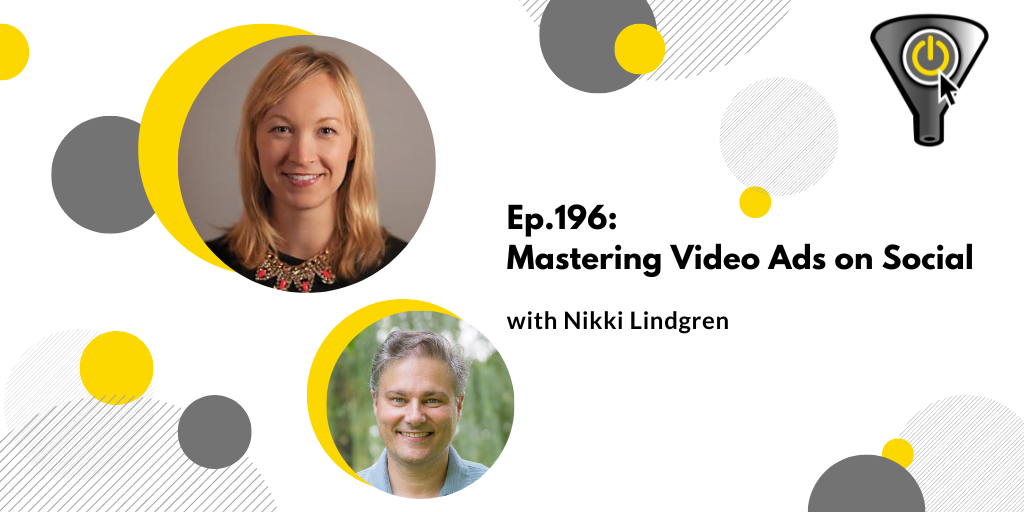
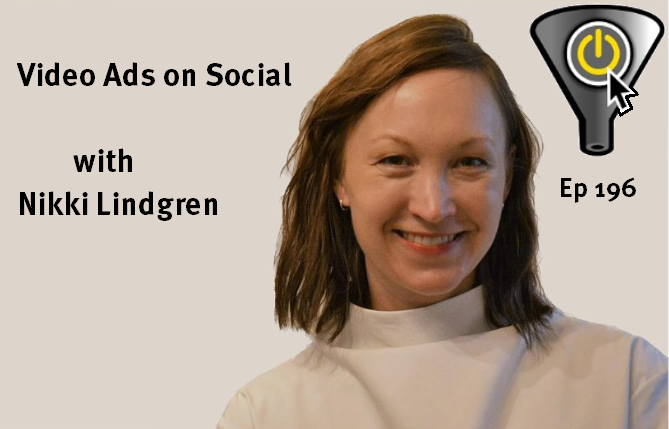
Our guest graduated from San Francisco State University and FIDM with a business degree and started working in-house at consumer eCommerce brands, running their digital marketing programs. After helping brands in every category from skincare & cosmetics to Books to jewelry, she built her own agency team to do this, Pennock, which is named after the rural Minnesota town where her family are from.
Let’s go to Northern California where she lives with her husband Tyler and three kids, to talk to Nikki Lindgren.
Chapter Timestamps:
00:00:00 – Intro
00:03:12 – Welcome Nikki
00:09:05 – Video on platforms like TikTok
00:23:37 – PSA
00:24:26 – Reporting to stakeholders
00:29:59 – Ad campaign optimization
00:35:05 – Contacting Nikki
You could say that the marketing field is going through exciting times right now. But you shouldn’t say that everything’s rosy. Here are examples of issues we’re grappling with:
The use of SaaS by Marketing may have freed us from being chained to the IT department, but after 25 years of binge buying all these point solutions, we’re saddled with loads of Technical debt, and the order to repatriate customer data from all these servers.
CMOs are tasked so much with explaining technology out there, much of their time is used up by the C-Suite’s questions, leaving little time for them to manage marketing.
There’s the question of whether the agency-client relationship will survive with AI. Some say brands won’t need an agency as they will generate their own creative. Agencies like Publicis, who’ve poured huge sums into their media-platform CoreAI that monitors billions of consumer signals and can inform what ads should be made, when & where.
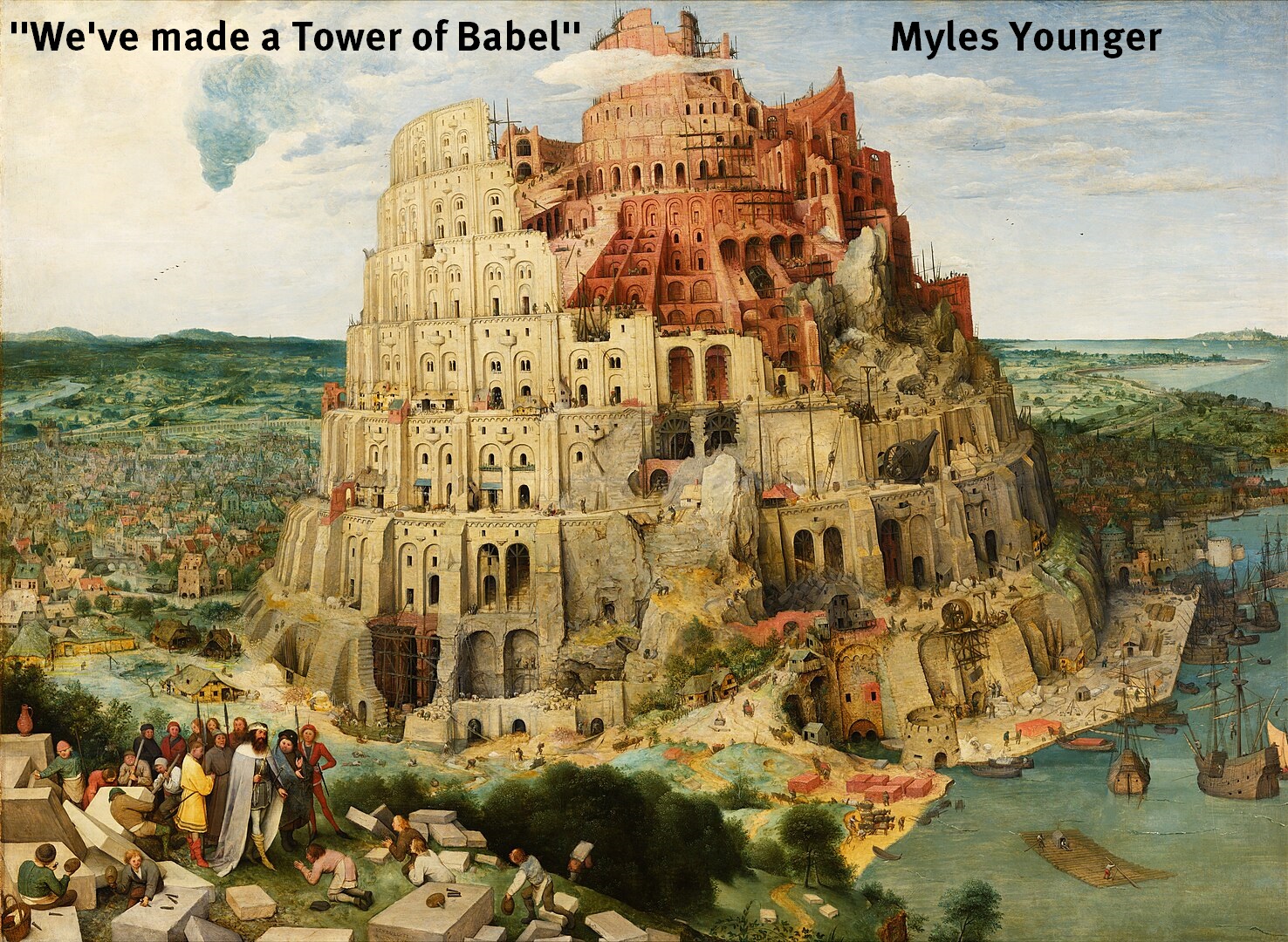
Because our field doesn’t have standardized accreditation, our terminology isn’t uniform, and we make dialects for our company or industry. How’s that working for us? About as well as it did for those building the Tower of Babel.
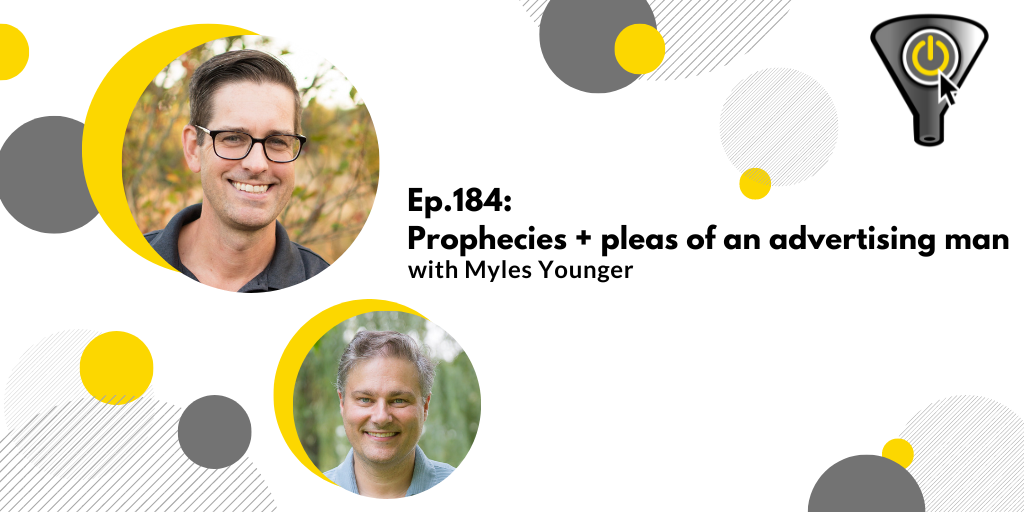
My guest is Myles Younger, Head of Innovation and Insights at U of Digital. Since graduating from Northeasters 20 years ago, he’s been up and down the marketing industry block. He was a client-side marketer in the tech and financial services sectors, He founded and led an adtech company, Canned Banners, that was acquired. He worked as a VP at data consultancy MightyHive which became Media.Monks.
He is in a new role now at U of Digital, spearheading this education thought leadership to expand the company’s educational offerings across different formats, learners, and markets
To me, he’s something of a modern-day David Ogilvy, who wrote his thoughts on his industry back in the day, in a book called “Confessions of an Ad Man”. Myles is just as outspoken on digital media and advertising topics, and the opinions he voices in trade publications and podcasts can come across as prophecies about this industry and sometimes pleas for how it could be better.
I caught up with him in Portland, OR, where he lives with his wife and three kids.
Timestamp/Chapters
0:00:00 Intro
0:03:25 Welcome Myles
0:04:55 Continuum of approaches to privacy
0:07:58 Our reliance on ad tech; its future
0:20:56 We can only go as fast as our people can
0:24:53 Tech debt we’ve brought on ourselves
0:31:50 PSA
0:32:37 Changes impacting platforms & ad agencies
0:42:44 Platforms exploiting advertisers in the name of Al
0:48:27 The good & bad of using their Cloud offerings
0:52:32 Best reaction is educating ourselves
1:00:00 How to reach out to Myles
Myles works at Uof.Digital (check out their newsletters)
Salesforce ‘no software’ campaign
Heisenberg Uncertainty Principle