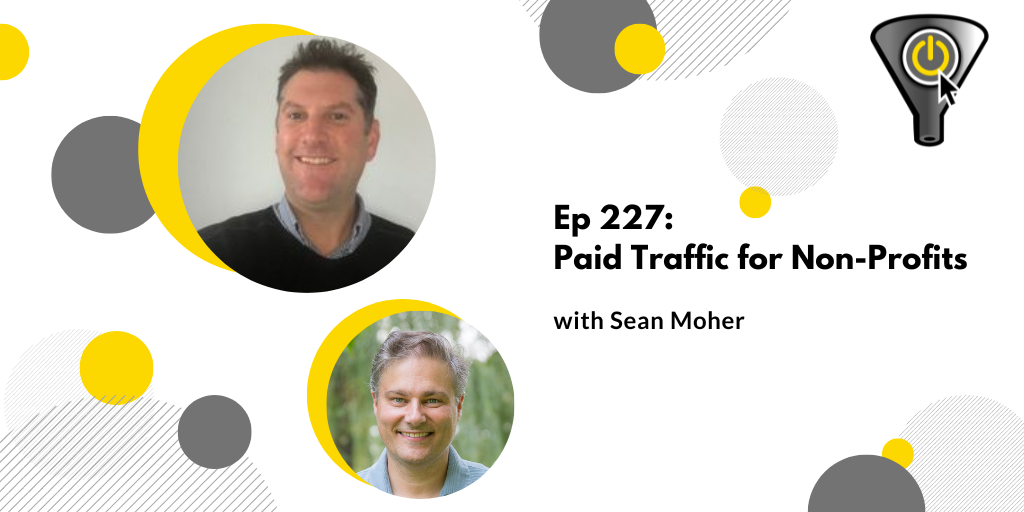
Paid Traffic for Non-Profits, with Sean Moher

Paid Traffic for Non-Profits, with Sean Moher

Episode 227

How do you amplify a message when you can’t lean on traditional justifications like “because we’ll make a profit out of this”?

In the for-profit world, the justification for marketing spend is straightforward: you put money in to get more money out. But how do you amplify a message when you can’t lean on traditional bottom-line justifications? For non-profits, associations, and social enterprises, the “profit motive” is replaced by a mission, yet the fundamental challenge remains identical—you must find and keep your “customers,” whether they are donors, members, or beneficiaries.

Marketing in the non-profit sector isn’t just about “pulling heartstrings”; it is about solving a business problem using the same tools as the private sector. Whether you are a plumber looking for a lead or a foundation looking for a donor, revenue is the common denominator that keeps the lights on.

In this episode, we explore how organizations can move beyond “waiting to be found” by using paid traffic as an accelerant. We will dive into why Mission-Based organizations should look at paid Traffic. Specifically The Google Ad Grant program. 

Whether you are a for-profit marketer looking to apply your skills to a “3-dimensional” cause or a non-profit leader ready to fill your funnel, it’s time to stop treating marketing as an afterthought and start treating it as a vital utility.

Our guest is a marketing consultant who supports both for-profit and non-profit local service organizations. Through his agency, Harvest Demand, he blends smart digital strategies with practical storytelling to help these organizations grow. He also brings experience in search and AI optimization, as well as leveraging digital advertising, including managing ad grants for non-profits. In other words, Sean’s all about making a real impact for a variety of organizations.

Let’s talk with Sean Moher.

Timestamps/chapters:

00:00 Intro

01:41 Sean defines the Nonprofit Landscape

02:24 What Is Marketing Without Profit? “Finding and Keeping Customers”

03:13 The 3-Party Value Exchange: Mission-Based Value Beyond Transactions

07:06 Emotion vs. Action: Telling Stories That Still Drive Donations

08:02 Measurement Reality Check: Analytics, Funnels & the Awareness Gap

10:39 Why Paid Traffic Matters: Stop Waiting to Be Found

11:34 Google Ad Grant 101: $10K/Month in Search Ads (and Why It’s Not Magic)

14:01 Rules, “Loopholes” & Eligibility: What You Can (and Can’t) Advertise

15:54 Grant Limitations & Strategy: CPC Caps, Leftover Inventory & Testing in Parallel

18:20 AI as a Utility: Faster Research, Better Campaigns & Knowing Your Donor Avatar

23:34 Doing Pro Bono the Smart Way: Aligning with Interests, Boards & Real Impact

26:28 Where to Find Sean + Final Takeaways


Listen to episode

People and concepts mentioned in the show:

Sean’s agency: Harvest Demand

Sean on LinkedIn

How Non Profits & Charities Raise Awareness, Free Traffic & Funding From AI + Google Search

Harvest Demand Google Ad Grant Quick Guide
Depositioning, with Todd Irwin

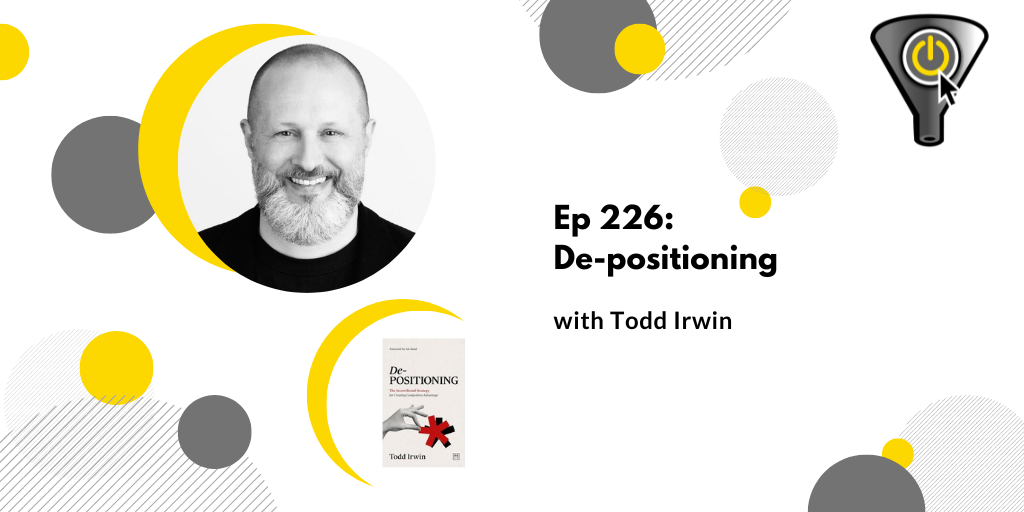
De-positioning with Todd Irwin

Episode 226

Positioning is an element that’s so foundational to  Marketing, it’s taught in every introductory class alongside the “Four Ps” of marketing. Positioning is meant to describe the choices a brand makes to maximize how the market sees it. Positioning is very powerful because it can set perceptions that drive customer loyalty, strong demand, and the willingness to pay a premium price.


But if all this is true, then why is the landscape littered with examples of where brands have flopped—cases where brand positioning actually caused a product to fail?


Take Microsoft Zune: Because how people thought of MP3 players had already been set by Apple 

Colgate Frozen Entrees: Sure, both food and toothpaste enter our mouths, but other TV dinner brands don’t plant the taste of toothpaste in your head.

Harley-Davidson’s “Legendary” Cologne: People buy a fragrance for the impression they want to leave, not one whose name evokes burned rubber and gasoline.

Cosmopolitan Yogurt: There are plenty of brands in the dairy aisle. People didn’t think a fashion brand belonged there

Frito-Lay Lemonade: Marketing a salty snack and chasing it with a  “Thirst-quenching drink” strikes people as a cynical cash grab

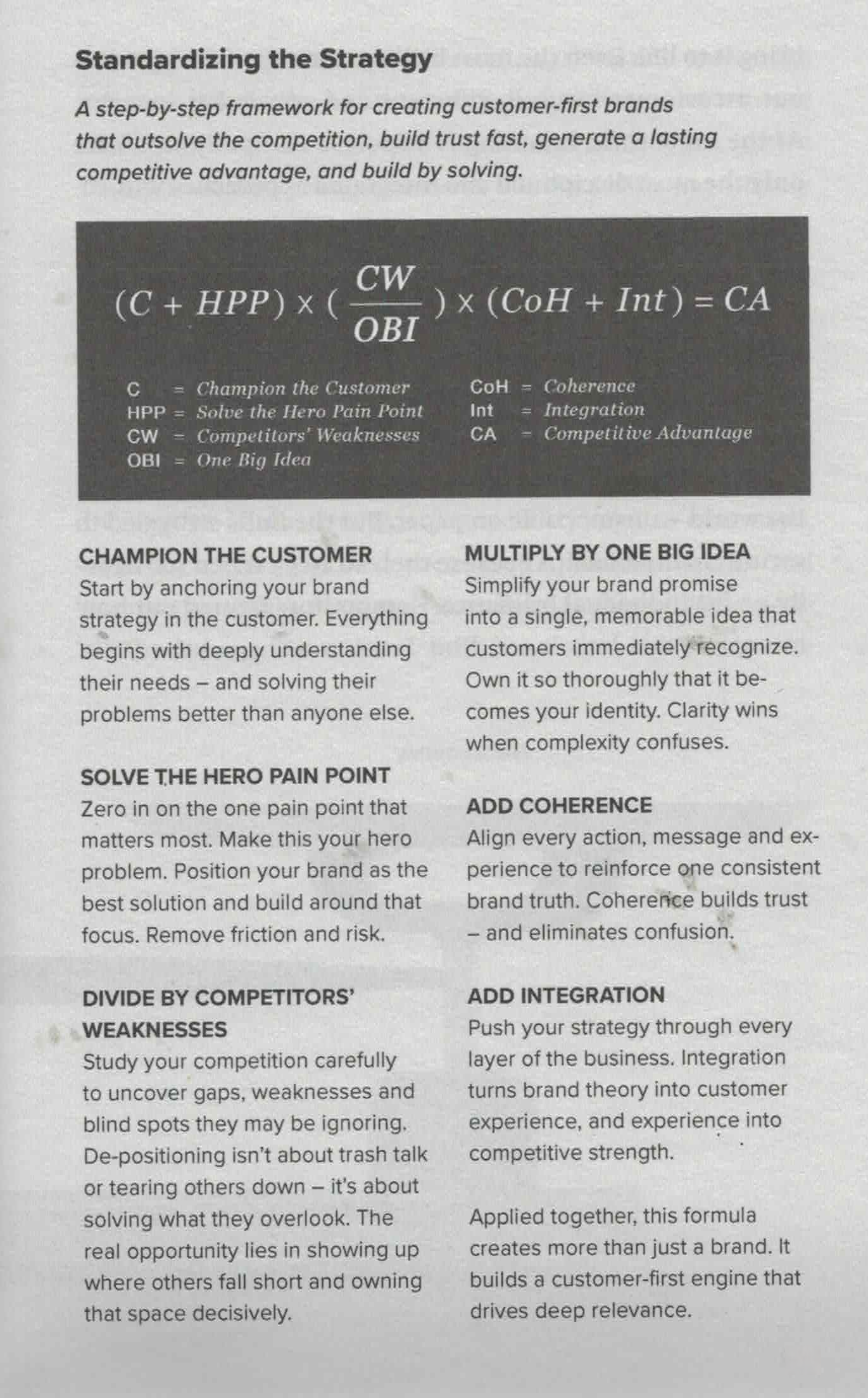
The reason these brands flopped is they tried positioning themselves on a competitor’s turf. The correct way to position yourself is to start with customer needs and work outward from there. To do this right, we’ve got to flip the traditional concept on its head. Instead of positioning, the author we’re talking with today says we must deposition our brands. 


He is the founder and chief strategy officer of brand strategy firm Fazer. Over three decades, he has led strategy for Fortune 500 companies as well as venture-backed disruptors. His work has been featured in the New York times Forbes and MIT technology review. 


Let’s go now to New York City to speak with Todd Irwin.


Listen to episode

Chapter/Timestamps

00:00 What’s Wrong with Market Positioning

01:47 Introduction to Depositioning 

02:46 Concepts and Framework

08:02 Real-World Examples of Depositioning

14:58 Integration and Coherence in Branding

26:48 Conclusion and Where to Find More

People/Products/Concepts Mentioned in Show

De-Positioning, the book

Creativity, Inc. Book 

Fazer Agency

Todd on LinkedIn https://www.linkedin.com/in/toddirwin/

De-positioning
Used with permission

Tried and True Marketing Reads

Tried & True Mktg books

Episode 225

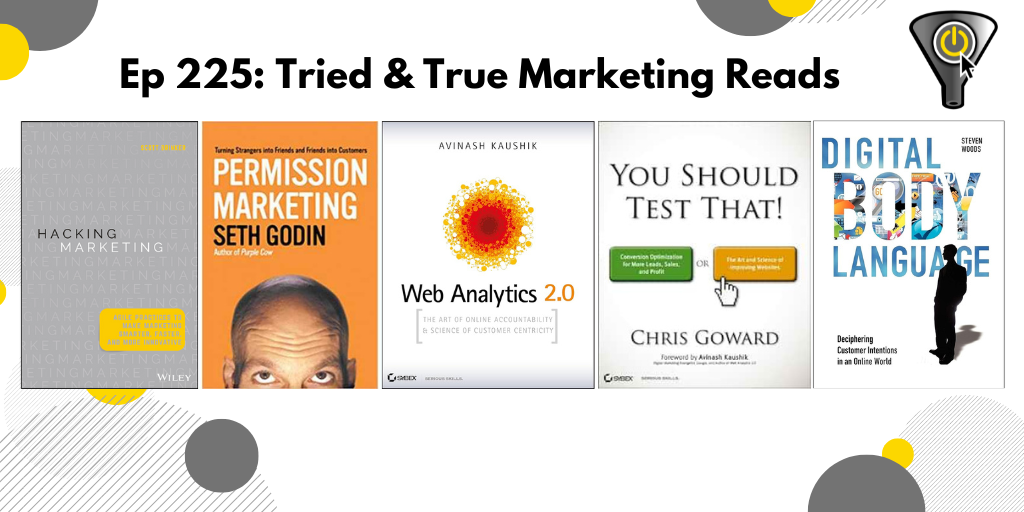
At the time I’m recording this it’s a new year. This is a typical time when people plan what they’re going to achieve fitness-wise, financially and professionally. If you’re working on that last one and wonder about what marketing reads you should try, I have some marketing books that could do just the thing. There are Five in all. – Let’s dive right in.


Listen to episode

Chapter Timestamps

00:00 Introduction and Overview

01:12 Book 1: Digital Body Language by Steven Woods

08:01 Book 2: Permission Marketing by Seth Godin

14:12 Book 3: Web Analytics 2.0 by Avinash Kaushik

19:55 Book 4: You Should Test That by Chris Goward

26:21 Book 5: Hacking Marketing by Scott Brinker

32:06 Conclusion and Final Thoughts

People and products mentioned in the episode: 

Digital Body Language by Steven Woods | Goodreads

Permission Marketing: Turning Strangers into Friends and Friends into Customers by Seth Godin | Goodreads

Web Analytics 2.0: The Art of Online Accountability and Science of Customer Centricity by Avinash Kaushik | Goodreads

You Should Test That: Conversion Optimization for More Leads, Sales and Profit or The Art and Science of Optimized Marketing by Chris Goward | Goodreads

Hacking Marketing: Agile Practices to Make Marketing Smarter, Faster, and More Innovative by Scott Brinker | Goodreads

I post all my personal reading at https://www.goodreads.com/heyglenns

Funnel Reboot Books-of-the-Month for 2026 are below, follow along and by sending me a question via the Get In Touch page, I’ll pose it to the author and get their response on the show.

January – Depositioning, Todd Irwin

February – Optimizing Sales and Marketing Data, Susan Walsh

Mastering constraints of Healthcare Marketing, with Cindy Grabowski

Episode 224

Thinking up a new product and commercializing it is not easy. All products face Financial, Technological and of course Competitive market barriers. But doing this in the field of Healthcare is not like any other industry.  In healthcare, there exist extra regulatory hurdles that make product innovation even more difficult. 

Before every medical device is introduced, they must find academics who will research them and publish articles that are heavily scrutinized by peers. Then they have to endure clinical screening before receiving government approval, which applies tight restrictions on what you can say about the product and how it’s used. After they enter most markets, the products must be coded so insurers will reimburse patients who use them.   So if you have a health or medical technology product, how can you market it when you face all these limits?”

For the first time here, the mic will be in somebody else’s hands. That person is Cindy Grabowski, founder of Mind Grove, a US-based training platform built specifically for MedTech professionals. Have to disclose that I have no affiliation with Mind Grove, other than giving them a  no-charge review of the marketing course on their platform.  Anyway, she turned the tables on me to hear me answer how you can market in the Healthcare space with so many constraints. 

As I present my points on healthcare marketing, listen for tips on: 

  • Building your digital assets throughout your product’s lifecycle

  • Setting up campaigns on digital channels without breeching privacy 

  • Engaging your patient population to create your content for you

  • Getting buy-in from decision-makers on upgrades to your marketing program. 

 So give this unique talk I have with Cindy a listen – I imagine even if you aren’t in Healthcare Marketing, you’ll come away with better ideas on how to overcome your own constraints.  Let’s go hear how we can navigate around constraints.


Listen to episode

Timestamp Chapters

00:00 Introducing Cindy Grabowsky

01:07 Glenn takes a turn as guest on the show

03:09 What we’ll cover in Healthcare Marketing

04:33 The Big Question: Why is Healthcare so hard?

06:38 Leveraging Data in Healthcare Marketing

09:56 Case Study: EndoGastric Solutions

17:27 Optimizing Digital Presence and Compliance

33:57 Skills for measuring, managing Healthcare Marketing

People/Products/Concepts Mentioned in Show

Cindy Grabowski is a Clinical Affairs Executive with 30 years of experience in MedTech companies. She founded the MindGrove training platform to help develop tomorrow’s medtech leaders and believes true success comes from balancing work with well-being.

Cindy on LinkedIn

Mindgrove Insights website

boromir
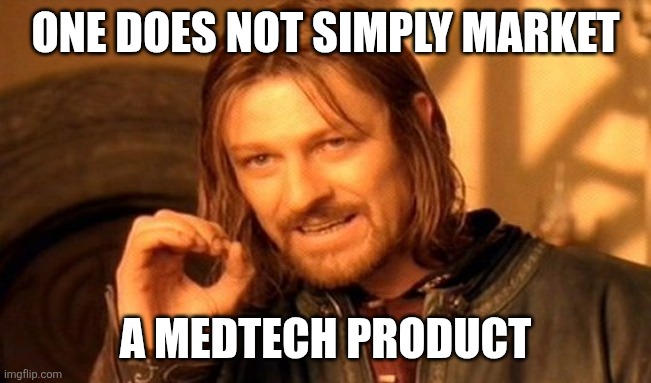
Boromir agrees that a healthcare marketer faces a precarious task

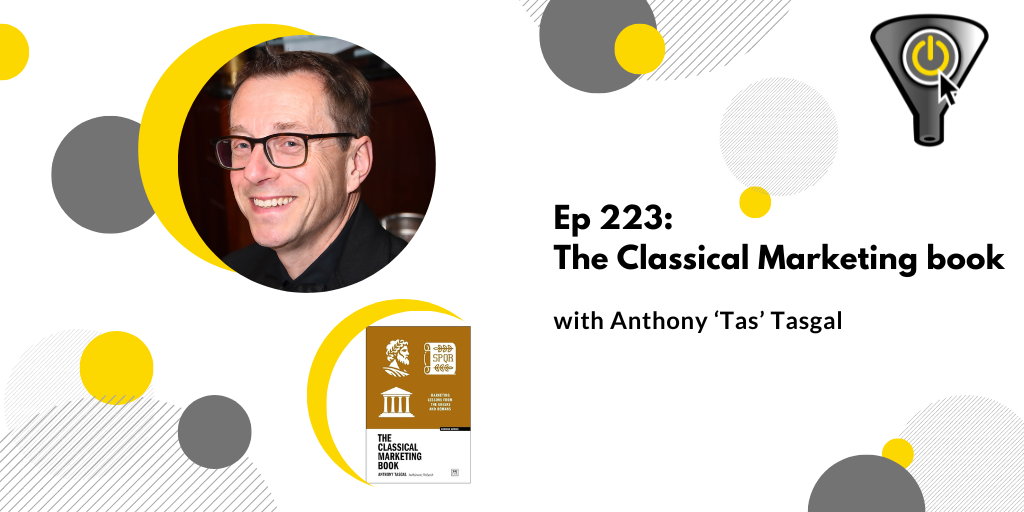
The Classical Marketing book, with Anthony “Tas” Tasgal

The Classical Marketing Book

The world we inhabit today is, in countless ways, an extended echo of breakthroughs made by two extraordinary cultures that came from a compact corner of the mediterranean between the 4th century BCE to the 2nd century of the current era. I’m talking about Greece and Rome, whose influence on contemporary language, thought, and culture is so deeply woven into the modern world that we navigate it every day without noticing.  Taking just language, be it English, French, Spanish or Italian, they all use words with origins that tie back to ancient law, institutions, arts and sciences. The concepts they gave linguistic expression to are stitched into everything that comes out of our mouths. 

You’ll hear a passionate discussion today by two guys who both did an undergrad in classics. But you won’t need to know anything about this to get great marketing lessons from today’s talk. Believe it or not, the ancients can teach us a fair bit about marketing!

Our guest’s undergraduate courses taken at the University of Oxford in Classical Greek Language and Literature inspired him to write the book we’re discussing today. 

He is a trainer, author, strategist, and lecturer who applies Storytelling, Behavioural Economics, and insight-driven thinking to brands and communications. Serving as a Course Director for several professional institutes, he also delivers TEDx talks and has spoken on stages around the world. His clients span organizations such as the BBC, Panasonic, Nokia, The Royal Albert Hall, and the UK National Health Service. An accomplished writer, he has published several award-winning books, including The Storytelling Book, which has sold 40,000 copies.

His seventh book, The Classical Marketing Book, is being released in North America at the start of 2026. Let’s go to the UK to speak with Anthony ‘Tas’ Tasgal.

Chapters Timestamps

0:00:00 Introducing Tas Tasgal

0:02:48 How Ancient Cultures Inform Modern Marketing Today

0:06:29 Uncovering Marketing Power in Word Origins

0:10:26 Using Ancient Myths for Market Segmentation

0:13:33 Connecting Behavioral Economics with Storytelling Power

0:17:21 Strategies to Avoid Marketing’s ‘Junk Folder’

0:21:52 Crafting Persuasive Frames with Historical Stories

0:26:43 The Power and Peril of Condensed Language

0:30:53 Mastering Persuasion with Ethos, Logos, and Pathos

0:34:48 Satire and Timeless Human Patterns in Marketing

0:37:57 Tapping into Ancient Wisdom for Modern Marketing


Listen to episode

Shownotes

The Classical Marketing Book

Tas’ TED Talk

Anthony “Tas” Tasgal on LinkedIn

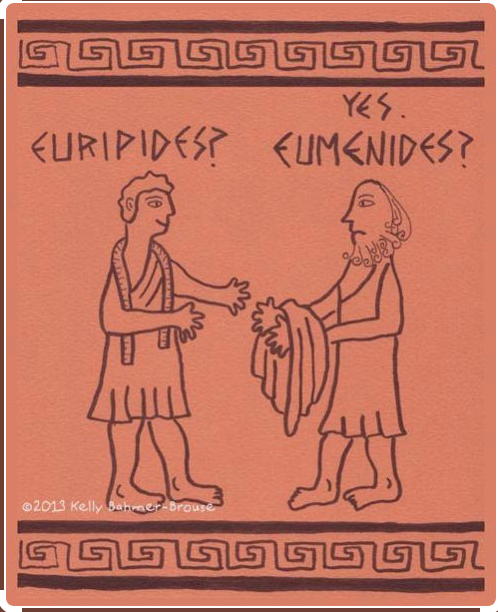
A Greek Poet Walks Into A Tailor Shop