Rebranding Done Right, with Travis Gobeil

rebranding done right

Episode 242

Every great brand has an origin story — and sometimes, a very different first draft.

Nike wasn’t always Nike. The company traded for years as Blue Ribbon Sports — until Phil Knight told a design student he might rename the shoes after a Greek goddess, and asked her to sketch up some symbols. She drew the goddess’s wings, turned them upside down, and there was the swoosh. Nike was born.

Three roomates in Austin TX, Brian, Joe, and Nathan noticed conference-goers complaining they couldn’t get a hotel room in town, so they rented out the air mattress and gave their place that cozy Bed and Breakfast feel. Those loving touches were codified in the heart-shaped “belo” logo that instantly identifies AirBnB.

Mercedes was a rebranded in the early twentieth century to express their ambition to make engines built for land, sea, and air – hence the three-pointed star.

And Walt Disney, whose brand was just his signature in 1923, grew to include Mickey, but it took over thirty years for what we know as their symbol to emerge. Their expansion to theme parks stretched the cartoon brand too far. But in the run-up to opening Disneyland in 1955, Walt gave it a centrepiece inspired by a German landmark known as Neuschwanstein. He called his the Sleeping Beauty Castle castle and it’s been in their brand ever since.

None of them would have reached such success without a rebrand. So whether you think it’s a good organizational move, or your once-revered icon or mascot has been anachronized and you have no choice but to rebrand, at some point you need to know how to get through one.

What does it actually take to rebrand right? That’s exactly what we’re digging into today.

Since becoming a Registered Graphic Designer in 2002, my guest has worked in-house and run his own design agency, across organizations ranging from large not-for-profits to small startups. He’s taught design for over fifteen years at Algonquin College, and for the past five, he’s run Kern Unit, a UX boutique studio. On the side, he’s always got some project on the go that puts his photography and illustration chops to work.

Let’s go talk with Travis Gobeil.

Listen to episode


People/Products/Concepts Mentioned in Show
https://www.myfonts.com

The Personal Branding Book, with Daria Dmitrieva

The Personal Branding Book, with Daria Dmitrieva

Episode 240

When I ask how someone forms their perception of a brand, what comes to mind? It might be they hear about it by word of mouth, or on an email thread or private message. In a nutshell, what’s said about our company when we’re not in the room, when we’re not in control of the message.
Now try the same experiment with our personal brand. Is our immediate thought how to look as good as possible? Is it how to curate the results that pop up when they search our name? Truth is, our personal brand has already been formed, we just weren’t in on those conversations.
Being active on our social media accounts can help, but we can also send the wrong brand message, shooting ourselves in the foot. When I first got onto Facebook and X, I feared that posting too much content would make me look distracted. When I did post, I felt a certain portion of them should be about my company or at least something generic. If I did have an opinion, it had to be watered down.My thinking was I should talk how my employer wanted me to talk. Turns out that is the complete opposite of how I should have been branding myself.
It wasn’t until I hung out my own shingle, that I realized being a generic-sounding consultant made me a commodity. That meant my rates were set by the market – I had to be a price-taker. But employees who act generically are also treated as commodities who must take whatever salary is offered. So regardless of where you sit, you’re better off with a good personal brand.
Am I saying employees should kiss ass on social, posting about how much they love their work? No. They can post thoughtful criticisms about the industry, they can post solutions to problems they and their peers face. Content like this boosts a person’s brand without offending employers. They know you won’t always be working for them; they’ll bask in your halo while they can get it.
But before you put out content you have to get introspective on what your brand stands for. It’s hard for us to stare at a sheet of paper and figure this out, we get better results using a framework. And this is where our guest can help.
Since getting her MBA from Moscow International Higher Business School, she has managed some of Europe’s largest brands, from Stollwerck, to Nestlé and Shell. She is also a visual artist, marketing consultant and coach. Her 2026 book deals with this very issue.
Let’s go now to the French seaside resort town of Cannes to speak with the author of “The Personal Branding Book”, Daria Dmitrieva.


Chapter Timestamps
00:00 Intro
02:27 Meet Daria Dmitrieva
03:12 Brand As A Compass
05:55 Premium Brand Parallels
08:56 Authenticity Over Packaging
13:33 Fear And The Shadow Gift
19:04 Become A Magnet
22:26 CEO Dreamer Critic Roles
26:33 Body Cues And Intuition
28:39 Celebrate Progress
32:02 Daria Origin Story
35:35 Where To Find The Book


Listen to episode

People, products mentioned in this episode

The Personal Branding Book

Daria’s Instagram profile

Daria’s LinkedIn profile

Daria’s website

Dante’s Inferno

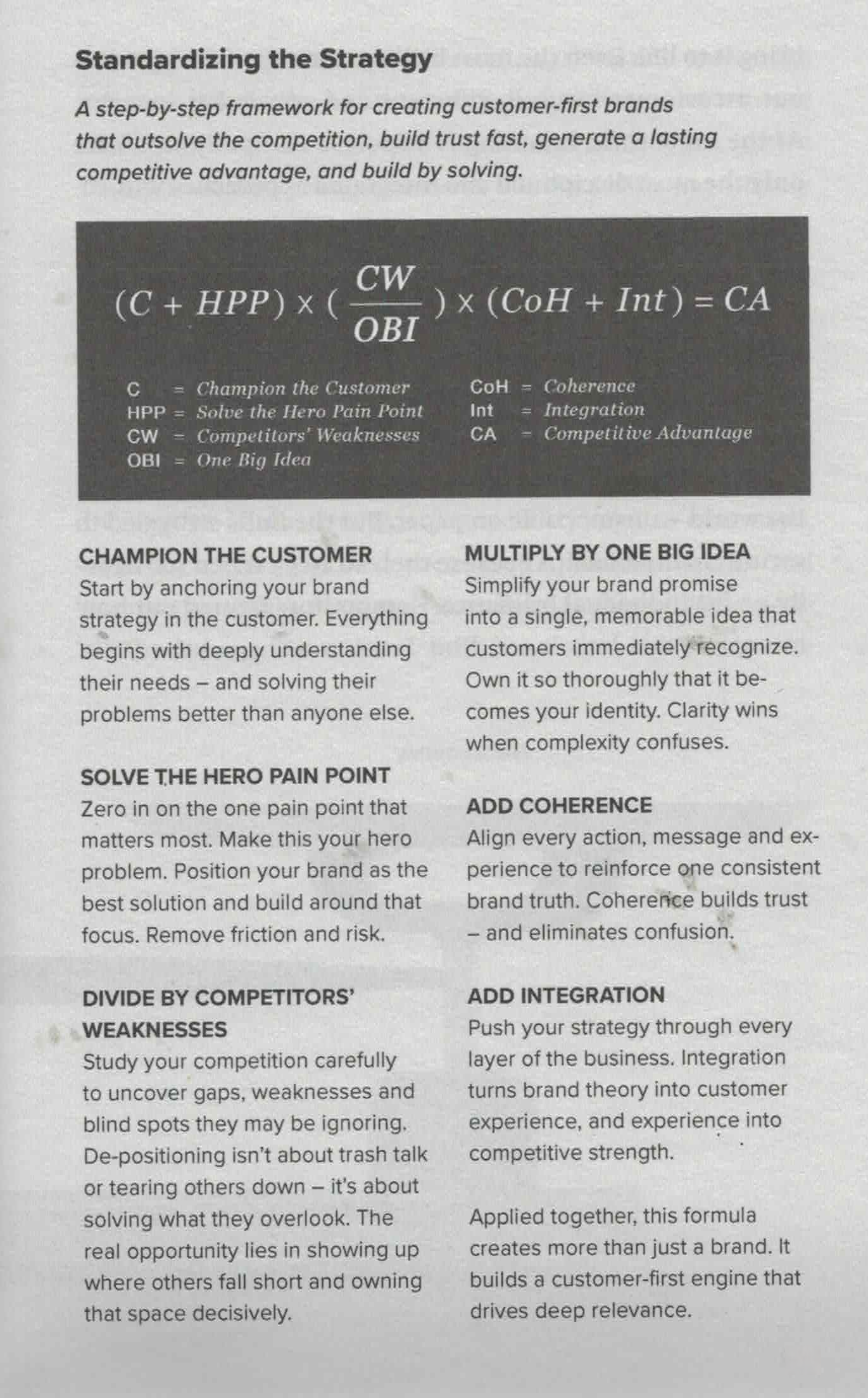
Depositioning, with Todd Irwin

De-positioning with Todd Irwin

Episode 226

Positioning is an element that’s so foundational to  Marketing, it’s taught in every introductory class alongside the “Four Ps” of marketing. Positioning is meant to describe the choices a brand makes to maximize how the market sees it. Positioning is very powerful because it can set perceptions that drive customer loyalty, strong demand, and the willingness to pay a premium price.


But if all this is true, then why is the landscape littered with examples of where brands have flopped—cases where brand positioning actually caused a product to fail?


Take Microsoft Zune: Because how people thought of MP3 players had already been set by Apple 

Colgate Frozen Entrees: Sure, both food and toothpaste enter our mouths, but other TV dinner brands don’t plant the taste of toothpaste in your head.

Harley-Davidson’s “Legendary” Cologne: People buy a fragrance for the impression they want to leave, not one whose name evokes burned rubber and gasoline.

Cosmopolitan Yogurt: There are plenty of brands in the dairy aisle. People didn’t think a fashion brand belonged there

Frito-Lay Lemonade: Marketing a salty snack and chasing it with a  “Thirst-quenching drink” strikes people as a cynical cash grab

The reason these brands flopped is they tried positioning themselves on a competitor’s turf. The correct way to position yourself is to start with customer needs and work outward from there. To do this right, we’ve got to flip the traditional concept on its head. Instead of positioning, the author we’re talking with today says we must deposition our brands. 


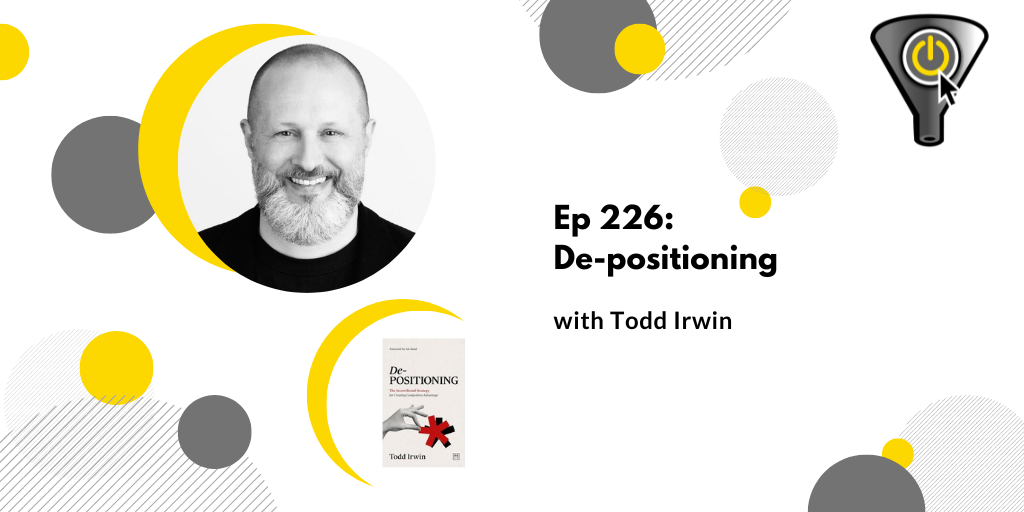
He is the founder and chief strategy officer of brand strategy firm Fazer. Over three decades, he has led strategy for Fortune 500 companies as well as venture-backed disruptors. His work has been featured in the New York times Forbes and MIT technology review. 


Let’s go now to New York City to speak with Todd Irwin.


Listen to episode

Chapter/Timestamps

00:00 What’s Wrong with Market Positioning

01:47 Introduction to Depositioning 

02:46 Concepts and Framework

08:02 Real-World Examples of Depositioning

14:58 Integration and Coherence in Branding

26:48 Conclusion and Where to Find More

People/Products/Concepts Mentioned in Show
De-Positioning, the book

Creativity, Inc. Book 

Fazer Agency

Todd on LinkedIn https://www.linkedin.com/in/toddirwin/

De-positioning
Used with permission