
Marketing Mix Modelling, with Jim Gianoglio

Jim Gianoglio

Episode 170

Whenever your marketing is being assessed by an analyst, they will use one of two approaches. 

The first is called Multi-touch attribution, which takes a customer who’s made a purchase decision, then puts weights on the touchpoints they had on various channels (Google calls their model ‘Data-driven attribution”) on the way to that point, to say which touchpoints were most influential. 

The other approach they may use is Media Mix Modeling. From what previous podcast guest Kevin Hartman told me about MMM, it’s a ‘tremendous undertaking.’  It involves collecting and analyzing historical data in different geographies at different times of the year: sales figures, both legacy and digital marketing channels, and external factors like economic indicators and even weather. It has its own jargon: Incrementality, ratios, betas, impact on objectives. Then there’s the math. It uses regression methods, both linear and non-linear, Frequentist vs Bayesian statistics. 

I get so overwhelmed with these modeling solutions, it’s like the old Who’s On First skit. I needed someone who would sort this out for me. 

Our guest has been a consultant in the marketing and digital analytics space for 15 years. I’m currently focusing on helping clients quantify the impact of their marketing efforts using Marketing Mix Models, experimentation, and various attribution methodologies.

He is so passionate, he started a newsletter called MMM Hub

He graduated from Carnegie Mellon with a Masters degree in Information Technology, focused on Business Intelligence & Data Analytics.

Jim is great at showcasing other people in the analytics community -He truly believes that all of us are smarter than any one of us. He, along with Simon Poulton, co-host the MeasureUp podcast

He talked with me from his home in Pittsburgh. Let’s meet Jim Gianoglio.

People/Products/Concepts Mentioned in Show

Jim’s Cauzle Analytics consultancy

The MeasureUp podcast.

John Wallace

Randomized Control Trials (RCTs)

Bayesian Statistics

Media mix modeling ratio:

  1. The Marketing Channels Being Used
  2. The Money Being Spent on Each Marketing Channel
  3. Campaign Results & Insights
I tell you, Multi-Touch Attribution isn’t real!

Episode Reboot – articles & videos shared by Jim:

What is Marketing Mix Modeling? 3 Benefits and Limitations – this is a very high-level article, explains some of the basics (but none of the ‘how-to-do-it’ pieces)

Market Mix Modeling (MMM) 101 – This is a good intro-level article highlighting the important high-level concepts of MMM

A Complete Guide to Marketing Mix Modeling – although this article/site is littered with a bunch of ads, the content is actually pretty good. It touches on the concepts as well as providing some code snippets for R, Python and SAS.

Videos / Courses to help get started with modeling:

MASS Analytics – Marketing Mix Modeling Master Classes – (free) 14 courses (YouTube videos) – very well done, starts at a beginner introduction to MMM and goes all the way through advanced modeling techniques. It’s about 3 hours in total.

Marketing Mix Modeling 101 – (free) online course (YouTube videos). This is 2.5 hours over 5 courses that focuses on MMM using Robyn, so is good if you’re comfortable using R.

Vexpower – What’s the impact of TV ads? – (free) this is a good intro into the concepts of modeling and MMM, and should only take 1-2 hours to complete 

Vexpower – Can we try Facebok Robyn? – (free) this one walks you through a complete example of using Robyn to do MMM
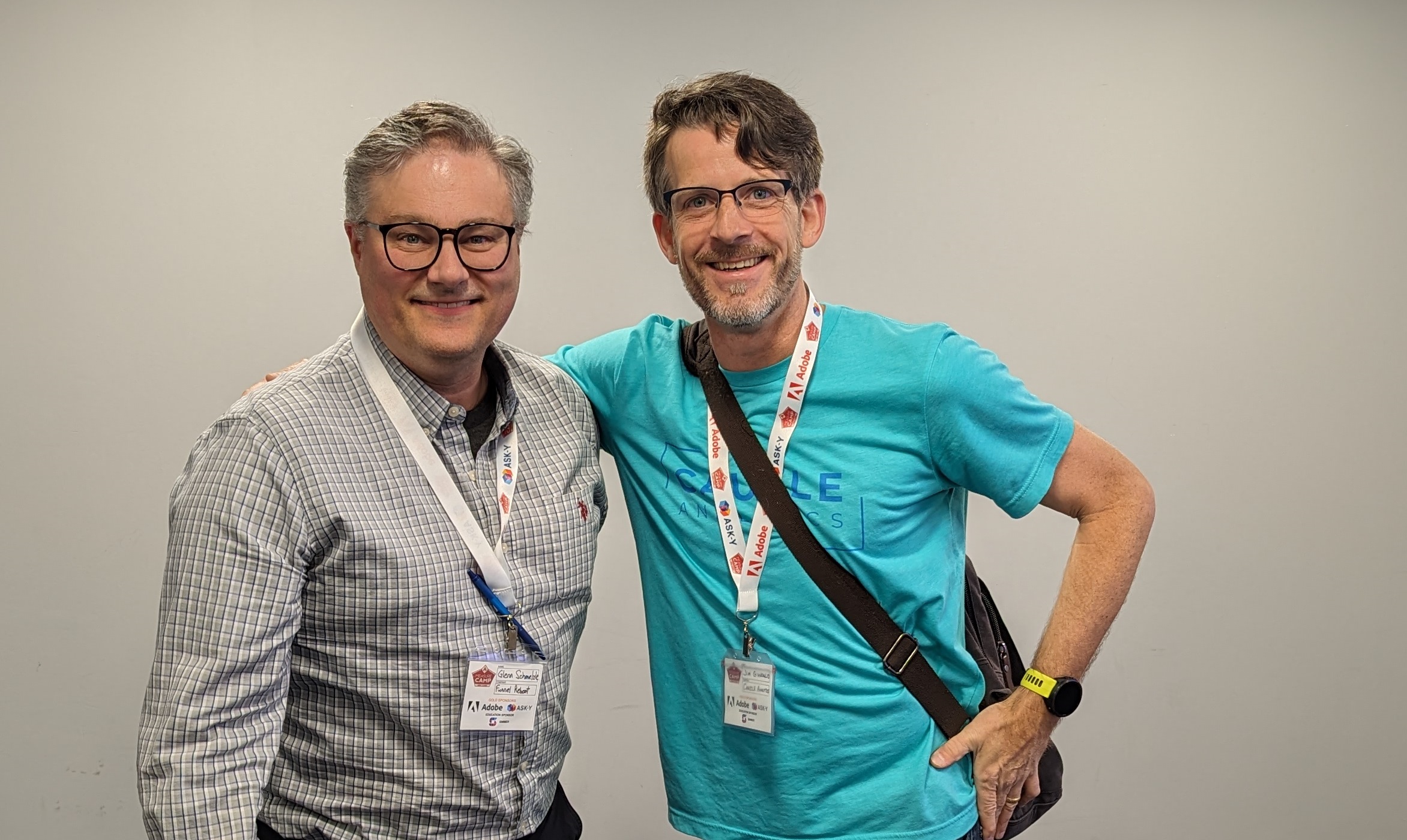
Glenn & Jim at MeasureCamp

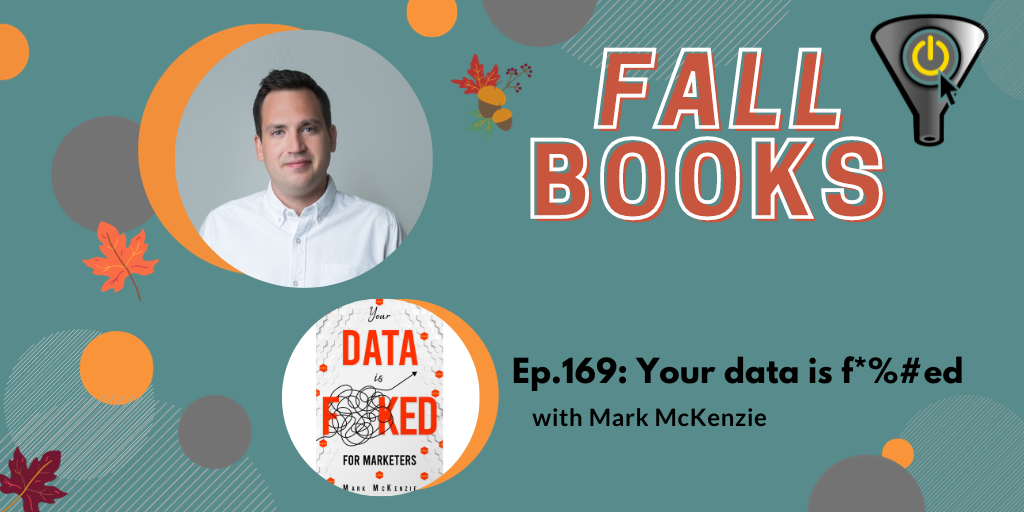
Your data is f*%#ed, with Mark McKenzie

your data is f'ed Mark McKenzie

Episode 169

You did everything just the way you were told. 

You took the tags the free tools gave you and installed them on your site, you configured platforms and poured over their reports, you connected the systems and even hired developers to hook everything up to a database. And yet, you have little value to show for all the work you’ve put into your company’s analytics 

You feel the analytics platforms are backing away from their responsibility to streamline all this. Instead, the answer from the largest of the bunch, Google, is they’ll hold onto your data if you use their newest tool, BigQuery, and pay them money to store your data …or is it their data… on it. 

The bad news is summed up in a 2023 book whose euphemistic name is “You’re data is flawed”– don’t want to get an explicit rating for using the actual name 

It was written by someone who empathizes with our situation and who lays out in the book the steps needed to generate positive financial returns for our analytics investment.    

Our guest Mark McKenzie started his career in London, but moved in 2014 to sunny New Zealand to work for a data-focused digital agency. That led to him founding and growing an analytics firm that served clients locally and in the UK, Australia, and the US. Following the sale of that firm in 2022, he moved with his family back to the not-so-sunny UK.  where he’s consulting with  on digital analytics

His focus on analytics can be seen through his volunteering at events such as ‘MeasureCamp’ and ‘Web Analytics Wednesdays.’ Let’s talk with Mark McKenzie.

People/Products/Concepts Mentioned in Show

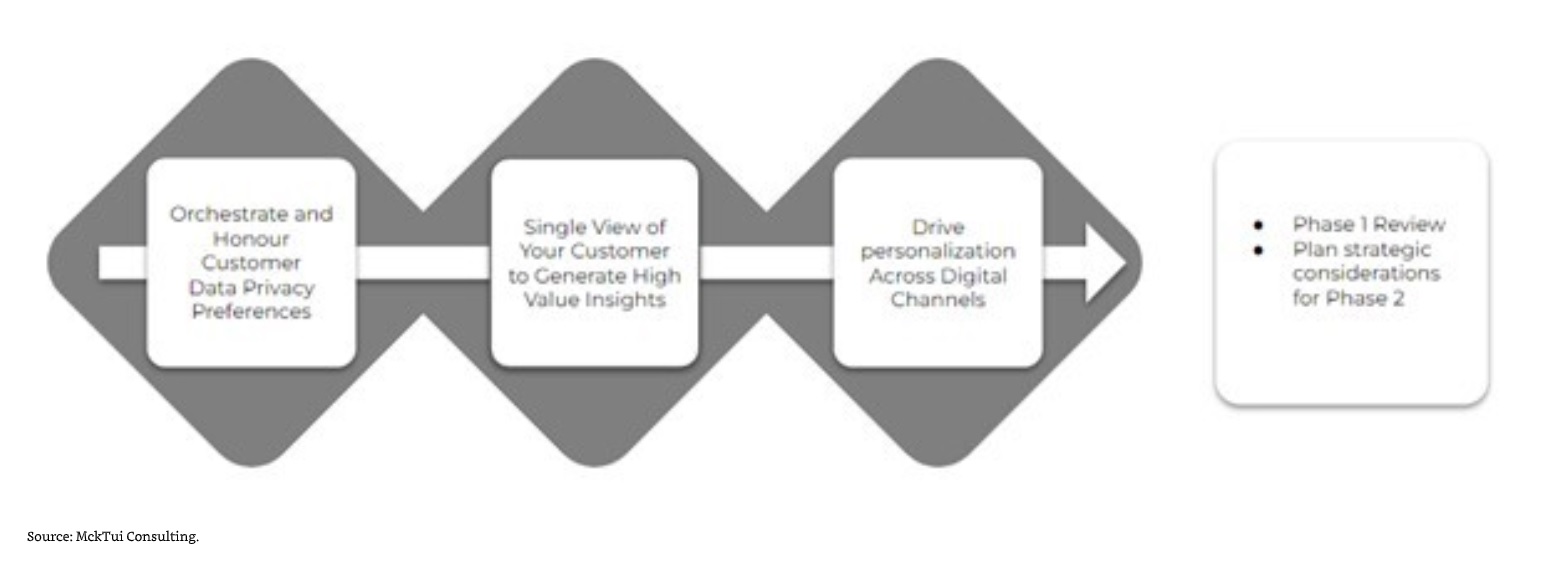
Mark’s MckTui consultancy

Avinash Kaushik

Cambridge Analytica

The Circles of Hell in Dante’s Inferno

With Federated IDs, a company personalizes an experience for someone using digital data that was sourced (but not shared with the company)  from multiple external systems.

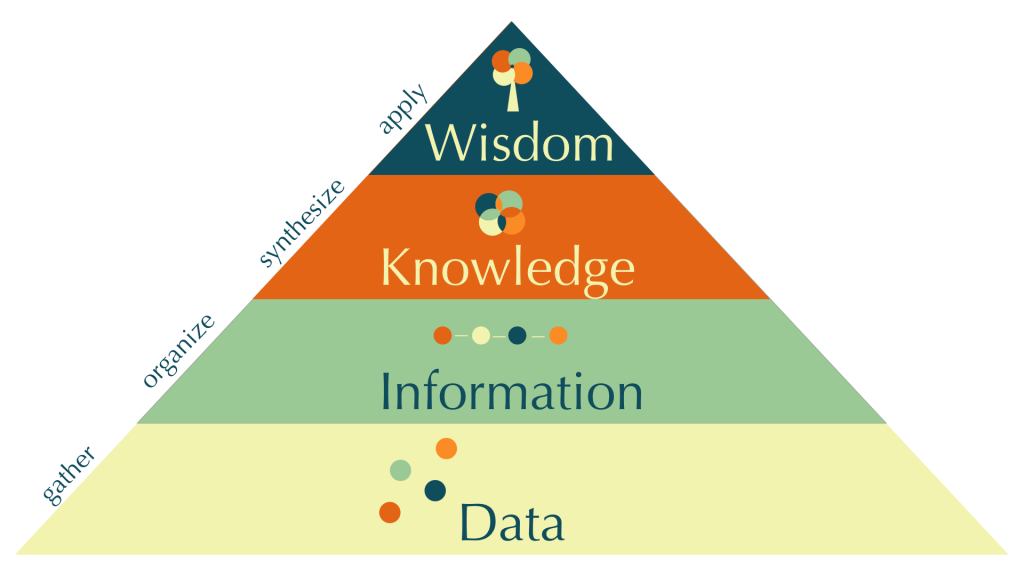
The DIKW Pyramid of Data, Information, Knowledge, and Wisdom

DIKW

Landmark blog post on Digital Analytics Immaturity

Tom Triscari

Chapters & Timestamps

0:00:00 Intro

2:26 Admitting our data is f_____ed

10:22 Prior to fixing data, must treat it as an asset

39:29 Fixing data we keep internally

54:47 The book and Mark’s contact info

Tying analytics tactics to strategies

What we can learn from artists, with Fred Pike

What we can learn from artists, with Fred Pike

Episode 163

Today we’re talking about what analytics has to do with music (check out this music about analytics by songwriter Kai Feng). We’re looking at a musician’s work style and seeing what analysts can adopt from it. According to today’s guest, these two disciplines have much in common.  

Fred Pike is a father, a grandfather and a string musician who both plays in and is president of the Milwaukee Mandolin orchestra. 

He is also a Conversion Rate Optimization (CRO), Google Analytics and Google Tag Manager expert, having been a founding member of the web development agency Northwoods which just celebrated twenty five years in business. He has also shared his knowledge through various courses and at CXL which is better known as Conversion XL and sessions he has presented at Superweek

He approaches marketing analytics in much the same way as he approaches a musical performance. So let’s listen to how he does that, in my chat with Fred Pike. 

People/Products/Concepts Mentioned in Show

Northwoods, the agency which Fred co-founded

Fred on LinkedIn

Fred on X/Twitter

Milwaukee Mandolin Orchestra

Great video by Kai Feng singing about data: https://youtu.be/D_upBpY1U2I?si=DxFHdl-PO7CqLGXH&t=147

Simo Ahava

Jeff Sauer

Julius Fedorovicius

Sonke Ahrens

“The dullest pencil beats the sharpest mind”

Episode 153: Boosting GA4 with BigQuery, with Johan van de Werken

Boosting GA4 with BigQuery, with Johan van de Werken

Johan van de Werken thrives best at the sweet spot between data, business & technology. 

Graduating with a philosophy degree from the University of Utrect, my guest started his career as a journalist for several Dutch publications, writing about everything from events and  pop culture to media, politics and economics. Around 2014 he switched from letters to numbers, working in CRO for several European e-commerce businesses. That led him to building dashboards and leveraging cloud platforms to turn raw data into usable marketing insights.

Working at an analytics firm that exposed him to BigQuery, he thought about sharing  what he was learning. Seeing that the  domain GA4BigQuery.com was available, he registered it and started posting there as a side gig. It got noticed by Simo Ahava, the founder of Simmer. That led Johan to release the GA4 and BigQuery course on their training platform. As we fast forward to 2023, GA4BigQuery is now a well-known resource for marketers. And its creator is now consulting full-time on data analytics under his own brand, Select Star.  Except for when he’s having fun playing in a punk rock cover band. 

People/Products/Concepts Mentioned in Show

SelectStar

GA4BigQuery

Johan on Medium

Funnel Reboot episode with “Learning Google Analytics” author Mark Edmondson

Definition of ETL

Definition of an IDE

Johan van de Werken

Episode 152: Data doesn’t lie…or does it? with Yuliia Tkachova

Data Doesn't Lie...or does it?

Data warehouses are amazing things: you can toss all kinds of information into them then pull mind-blowing insights out the other end. This feat can happen because you’re connected to outside systems holding their own database tables. A copy of whatever has recently gone into the table is taken out and shot through a data pipeline and pushed into your data warehouse. But today’s data stacks contain Multiple clouds, hybrid environments, and so many data pipelines the programs in charge of monitoring and logging the flows almost can’t manage them. It becomes overwhelming to manually check and ensure the quality and integrity of the data.  The more sophisticated the systems, the more errors creep into the data. If we rely on flawed data, the outcomes and insights we generate will be equally flawed. This is where data observability comes in.

In this episode you will hear about something called an observability platform. It identifies real-time data anomalies and pipeline errors in data warehouses. Now there’s a twist here because we’re in a cloud computing environment that charges by number of computing cycles. You don’t want an observability tool that’s another pipe accessing client data and running up the meter. The good news is there’s an easier way to detect when data has gone awry, by comparing log files – basically  metadata – they are just as effective at alerting you to problems. 

If you’d like what this is doing described in a completely non-technical way, think of Hans Christian Andersen’s Princess and the Pea. There is a girl who comes to a castle seeking shelter from the rain claiming to be a princess. The queen doubts whether she is truly of noble blood, and offers her a bed, but this bed has twenty mattresses and twenty down-filled comforters on it. A pea is placed underneath the bottom mattress to test if this girl detects anything. The next morning, the princess says that she endured a sleepless night; there must have been something hard in the bed. They realize then and there that she must be a princess, since no one but a real princess could be so delicate.

I spoke with Yuliia Tkachova, the co-founder and CEO of Masthead Data, a company which recently received $1.3M in a pre-seed round. Originally  from Ukraine, Yuliia came to found Masthead after work that convinced her of the need for an observability solution. She had roles as a Product Manager roles at OWOX BI and Boosta, where their data solutions encountered problems. Prior to that, she did marketing for RAGT.  She has Bachelors and Masters degrees from Suma State University, specializing in MIS & Statistics. She also serves as an Organizer at MeasureCamp, a volunteer community where analytics professionals come together to learn.

People/Products/Concepts Mentioned in Show

Masthead’s YouTube Channel

Connect with Yuliia Tkachova on LinkedIn 

Splunk

NewRelic

Image credit: Edmund Dulac in Hans Christian Andersen tales