Episode 118: Converted, with Neil Hoyne

Converted, Neil Hoyne

In digital marketing, we’re all striving to do what works. Yet whether we’re in-house or at an agency, we’re basing our definition of what works on a small sample size. Honestly, none of us can zoom out far enough to the general traits of successful marketing. That is, unless you’re someone who’s tasked with measuring marketing data at the organization with the single-largest quantity of it on the planet. 

My guest has gained a lot of insight on successful sellers in his role as Google’s Chief Measurement Strategist, where he has led over 2,500 engagements with the world’s biggest advertisers. He is a Senior Fellow at Wharton and holds degrees from Purdue University and UCLA. And in his book “Converted: The Data-Driven Way to Win Customers’ Hearts” the difference (I’m simplifying here) is that the  best ones humanize their funnels for their buyers. 

“Wait,” you say, “we already know  how to treat people nicely, we’ve known how to do that since humans have been around. You’re right, yet it’s surprising how we lose the human element is when we move commercial interactions online. My guest wants us to learn – or more correctly, relearn how to make our marketing more human. 
People/Products/Concepts Mentioned in Show

Episode Reboot

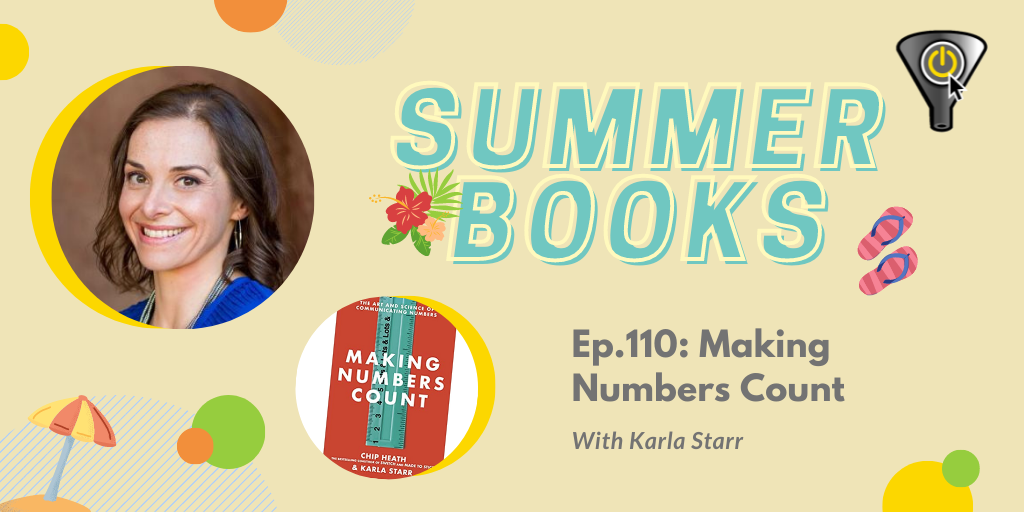
Episode 110: Making Numbers Count, with Karla Starr

We humans are good at dealing with small numbers. So good, scientists have coined the word “Subitizing” to describe how we know small numbers as well as the back of our hand. The opposite is also true. We can’t differentiate big numbers. We know that 10 to the power of 10 is bigger than 10 to the power of 9, but how much bigger? Even on hearing that they differ by a factor of billions, we stumble to gauge that kind of scale. 

This puts those of us who present numbers in a pickle. Historical greats like Florence Nightingale had a terrible time presenting her data to government leaders. She broke with convention, framing everything in terms of soldiers not statistics, to argue how to prevent needless deaths in military hospitals.  The book in today’s show explains methods used by her & others to convey numbers that the brain has a hard time grasping.

Knowing tactics that worked for Florence,  should at the very least help us convince management to approve our marketing initiatives. 

Since graduating with a BA in Psychology and Philosophy from NYU, Karla Starr has written columns for Medium  and appeared on NPR and CBS Sunday Morning. She has also written for many magazines and won an award for the Best Science/Health story from the Society of Professional Journalists.

Her first book was Can You Learn to Be Lucky? Why Some People Seem to Win More Often Than Others. We’re talking today about the second book  Making Numbers Count: The Art and Science of Communicating Numbers, with Chip Heath 

People/Products/Concepts Mentioned in Show

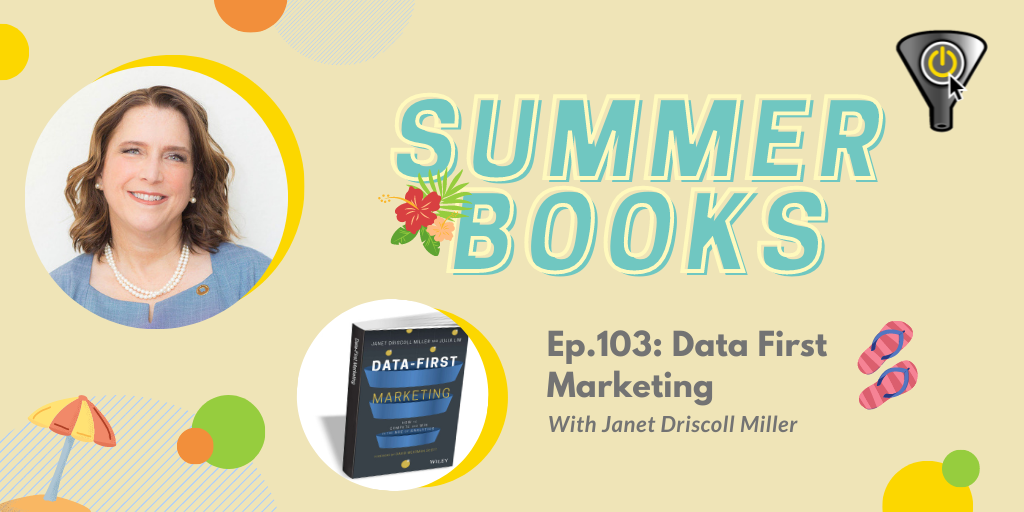
Episode 103: Data First Marketing, with Janet Driscoll Miller

If you’ve listened to this show, you know that I believe we can base all the marketing decisions we make on data. This fourth book in our Marketing Books summer series talks with an author who’s extensively described how we get data in a form that helps us make decisions.

Janet Driscoll-Miller brings over twenty years of search engine marketing experience to Marketing Mojo and is considered a leading expert in her field. Janet has spoken at search engine and marketing conferences including Digital Summit, SMX Advanced, MarketingProfs B2B and Pubcon. Janet is also a frequent guest lecturer at colleges and universities including the University of Virginia and James Madison University.

In 2020, she co-authored Data-First Marketing with Julia Lim.

People/Products/Concepts Mentioned in Show

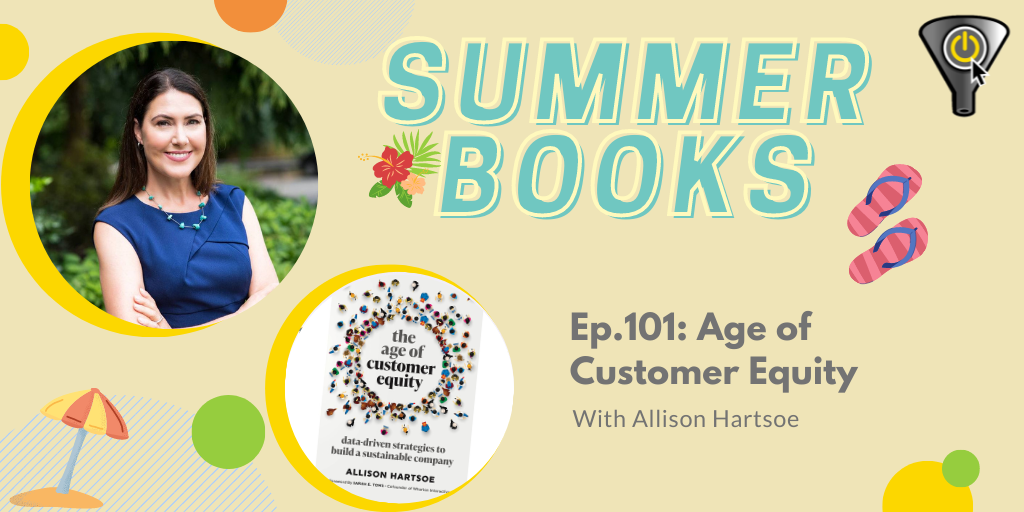
Episode 101: Age of Customer Equity, with Allison Hartsoe

Think of the data you have on your customers as having value. It does, by the fact that the more you know your clients, the better you can serve them. This “unlocked potential revenue” of all your current customers can be quantified as your whole customer’s lifetime value (CLV) added together. 

This number is known by finance people as Customer Equity, but it’s much more than a mathematical formula. The value that VCs and public markets have put on assets such as loyalty programs and subscription lists is often greater than the value of a company’s capital assets!

While it might sound like it has to do with finance, this is all highly related to marketing. This is because each tactical decision gets vetted by whether it will optimize CLV; it becomes your company’s North Star.  

Allison Hartsoe has strategize d the digital customer analytics for dozens of Fortune 500 customers throughout her career. She now leads an analytics consultancy in Portland OR, Ambition Data, and published the book, “The Age of Customer Equity”,  in 2021. She has been published in Forbes.com, MIT Technology Review, and Fast Company and somewhere in between all this writing, she found time to cycle across the USA. 

People/Products/Concepts Mentioned in Show

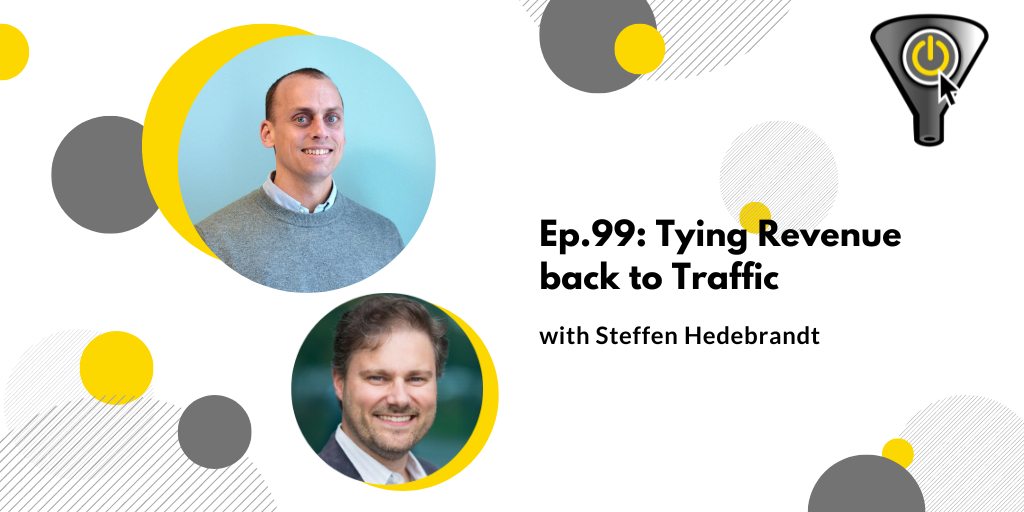
Episode 99: Tying Revenue back to Traffic, with Steffen Hedenbrandt

Disclaimer: When I bring technology vendors on the show, you should know that they are not sponsors or affiliates. They’re simply here to give you a broader perspective.

If you have been to the eye doctor for near or far sightedness, the equipment that’s likely been used to assess you is a phoropter. The part that’s put in front of your eyes looks somewhat like a pair of glasses, but it branches out from that with an imposing array of lenses, dials and machinery. You are shown an eye chart and the doctor flicks through alternate lenses, asking you to say whether the image is clearer with lens 1 or lens 2. When tests on the phoropter & other equipment is done, you end up with lens prescriptions that are right for you. 

This process isn’t unlike what’s behind marketing’s use of attribution models. They serve to show what impact advertising channels have on a company’s revenue, with pre-set models, each one weighing the impact of digital touchpoints differently. By attributing revenue back to the channels and campaigns that helped acquire it, you get a clearer view of what you are getting for your marketing dollar. 

Of course, marketers don’t use phoropters, but doing attribution analysis does take specific tools, and that’s what this episode takes us through. 

My guest is Steffen Hedenbrandt, who’s growth-oriented, data-driven and loves all parts of scaling a business.  He worked at places like Upwork and Airtame before cofounding DreamData, where he serves as the Chief Marketing Officer.He has a bachelor’s degree from Aalborg University and a Masters from Copenhagen Business School. 

People/Products/Concepts Mentioned in Show