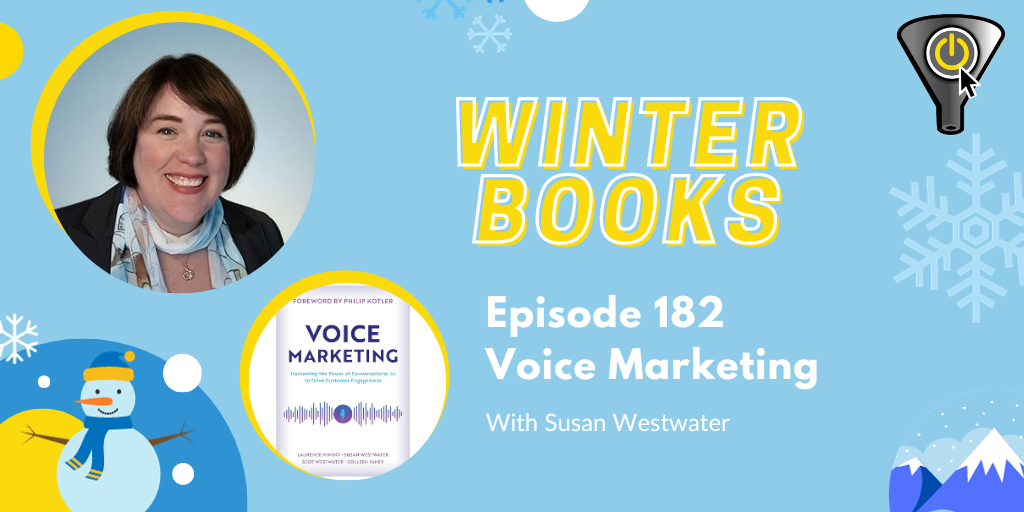
Today’s episode looks at how pervasive voice technology is, and how marketers can make better use of it.
After spending over twenty years in marketing agencies, Susan Westwater became cofounder and CEO of Pragmatic Digital. Susan has talked and written on the role voice & conversational AI plays in marketing and business strategy.
Susan is coauthor of Voice Strategy: Creating Useful and Usable Voice Experiences. Recently, she co-authored the book “Voice Marketing”
Chapters & Timestamps
0:00 Intro
2:30 About Voice marketing
27:15 PSA
28:00 Susan’s process for enabling voice technology in your marketing
This is the second of two shows on doing data-driven marketing, in a way that respects user privacy. No matter how much we crave, there will be fewer ways to capture it. At time of recording, Google says Chrome will stop supporting 3rd party cookies in 2024. Our choice should not be to switch to other forms of tracking, but whether we’ll go into this privacy-centric era voluntarily, or out of necessity.
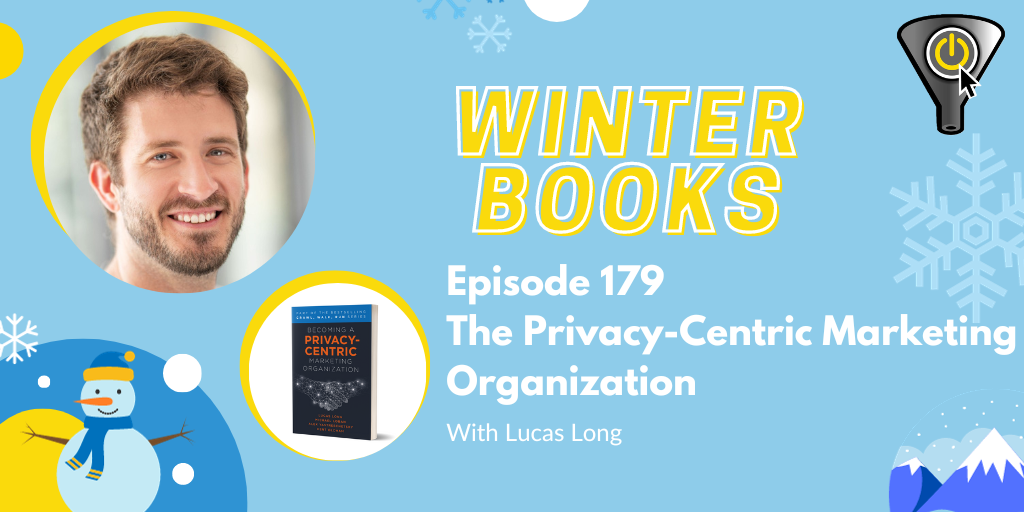
Having less data on our customers may sound like it’s bad for business, but a recent book argues that it’s actually necessary to maximize your long-term ROI. The book, “Becoming a Privacy-Centric Marketing Organization,” was a co-written by a group who work together at InfoTrust. One of those co-authors is today’s guest.
Lucas holds a Bachelor’s degree from the University of South Carolina and is currently at the forefront of delivering tag architecture solutions for major corporations. Specializing in sales and business development, he leads the implementation of tag governance processes through his role in managing InfoTrust’s Tag Inspector product. His expertise spans sales and marketing strategy, web analytics, and tag management. With a focus on educating clients about the critical aspects of proper tagging and user behavior analysis, Lucas collaborates with some of the largest agencies and enterprises globally.
You took the tags the free tools gave you and installed them on your site, you configured platforms and poured over their reports, you connected the systems and even hired developers to hook everything up to a database. And yet, you have little value to show for all the work you’ve put into your company’s analytics
You feel the analytics platforms are backing away from their responsibility to streamline all this. Instead, the answer from the largest of the bunch, Google, is they’ll hold onto your data if you use their newest tool, BigQuery, and pay them money to store your data …or is it their data… on it.
The bad news is summed up in a 2023 book whose euphemistic name is “You’re data is flawed”– don’t want to get an explicit rating for using the actual name
It was written by someone who empathizes with our situation and who lays out in the book the steps needed to generate positive financial returns for our analytics investment.
Our guest Mark McKenzie started his career in London, but moved in 2014 to sunny New Zealand to work for a data-focused digital agency. That led to him founding and growing an analytics firm that served clients locally and in the UK, Australia, and the US. Following the sale of that firm in 2022, he moved with his family back to the not-so-sunny UK. where he’s consulting with on digital analytics
His focus on analytics can be seen through his volunteering at events such as ‘MeasureCamp’ and ‘Web Analytics Wednesdays.’ Let’s talk with Mark McKenzie.
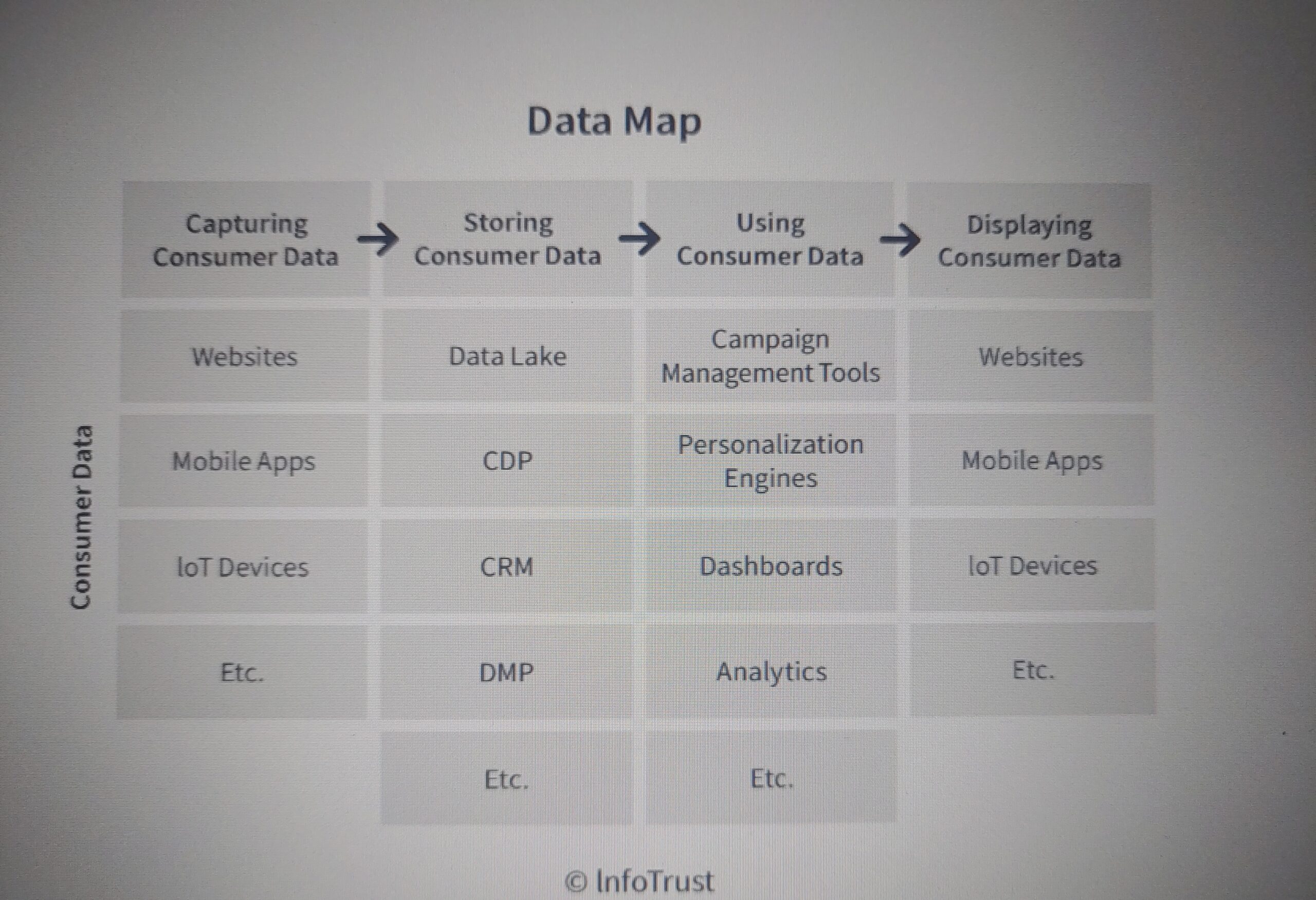
With Federated IDs, a company personalizes an experience for someone using digital data that was sourced (but not shared with the company) from multiple external systems.
The DIKW Pyramid of Data, Information, Knowledge, and Wisdom
Memes act as our collective memory’s transportation system. The instant they are seen or heard, our minds hop to whatever emotion the meme conveys. The use of this brain-hack is as scary as it is impressive.
Memes rarely come to us via broadcast media. Instead, they spread organically online. Most of the original uses for these have faded, while the internet has collectively assigned them new meanings.
Our guest was so interested in memes that he came out with a book in 2023 called Marketing Memetics to explain all that marketers must consider when using them.
Mike Taylor shares content on wider marketing topics, such as AI & prompt engineering, which O’Reilly has commissioned him to write a book that’s due to come out in 2024. Experimentation is also a passion; he’s run over 8,000 CRO experiments, and he shares the insights he gets on his social channels, and in courses he has on LinkedIn Learning and udemy.
His love of learning & teaching can be traced back to his studies at Anglia Ruskin University and U of Nottingham, where he obtained his masters degree.
But in between his schooling and the present, he was working in the marketing trenches, at places like Candor, SumoMe, ShopStyle, Travelzoo and marketing agency Ladder.io, which has grown from its beginnings with Mike and his co-founders to a team of 50 people.
When it comes to branding, there are many facets to getting it right. But we don’t have to know all about branding to know that only one mistake can cause deep, irreversible damage to a brand.
In 2009 the Tropicana juice company thought they’d be clever by taking their recognizable straw-in-an orange carton and simplify it down to an indistinct orangish object. Design critics howled and customers shied away from the sight of it at store shelves. In response to this 20% decline, Tropicana rapidly went back to the old packaging
Gerald Ratner, CEO of the UK Jewelry chain that bears his name, responded to a question about some of his products by saying they were ‘total crap.’ The company eventually closed over 300 of its stores, admitting that this comment caused a decisive blow to their reputation.
Subway named a game after long-time spokesman Jared Fogle’s famous weight loss pants and called it ‘JARED’S PANTS DANCE’, just at the time that Fogle pleaded guilty to sexual interference charges.
To learn how branding is done right, today we are speaking with Dan White.
He graduated from Cambridge University with a Masters of Arts. He has worked in marketing, market research and brand consultancy for 30 years. He is equally passionate about using imaginative visuals to bring marketing concepts to life. If people understand and remember an idea thanks to a clever framework or visual metaphor they will be able to use it in their day-to-day work.
Three people have been repeat guests on this show; Dan White is now the fourth.