Episode 116: Merging GA4 with all your Marketing Data

Merging GA4 with all your marketing data

In this episode I’m giving you the process that’s used in my agency’s work to get B2B companies onto Google’s full analytics stack. This episode is split into two parts.

Installing GA4 (from 1:30 to 10:45) – For the first third of this episode, I go through the steps that companies should follow to install GA4, including setting up streams, conversions and links to Google Ads accounts.

Installing Google and third party components for consolidated analysis and visualization of your marketing data (listen for melody at 10:45 to end) – the remaining time roams through the rest of the tools that give a complete picture of your B2B funnel.

People, products & concepts mentioned in episode:

Scott Kelley

Jim Sterne

Jim Cain

David Krevitt

You may also be interested in this other reporting-related solocast:

How Dashboards Make the Whole Funnel Work, from podcast episode 9

Episode Reboot:

Another path for completing this process is to implement them together with peers in a workshop environment.  By the end of the session, you leave ready to make reports leveraging all your company’s marketing data. I am leading several two-day workshops in several Eastern states and provinces. To find out more, visit https://gafast4ward.com

Episode 57: How AI Levels the Marketing Playing Field

If every part of your customer acquisition can be measured, you’ll figure out how to do it profitably. That premise has driven why digital marketing, and especially Pay-per-click (PPC) is managed by experienced humans. These professionals scour through data for the relationship between a company’s ads and the buyers actions; once found, budgets get shifted to achieve that optimal effect.  

A wrench has been thrown into our acquisition dreams by the ad platform titans: Google, Facebook and Microsoft (who own LinkedIn). Thanks to major AI investments they have made in the last five years, they’ve been able to automate much of the work that marketing professionals have done. In tandem with implementing their ‘smart’ software that runs autonomously, they have been restricting a marketer’s ability to manually control campaigns. 

The platforms believe their AI is smart enough to run marketing, so we can either be passive, letting them spend our money as they see fit, or we can choose to give them navigational assistance while they drive. The point is, you should have a game plan that works with the platforms’ AI. One that, over time, will generate the leads you need at the best possible acquisition cost.

I believe listening to this episode will give you that plan. It covers:

  • How marketing has become more computationally complex than humans can handle
  • What was in it for the platforms to automate PPC marketing
  • Stages of maturity for dealing with data, ending with predictive analytics
  • Why you shouldn’t fight ad platform automation, but instead use your business data to train algorithms how to market you more effectively
  • How you should integrate your in-house systems and apply data science to uncover insights

People/Products/Concepts Mentioned in Show

Paper estimating how much data optimized advertising requires, authored by Randall A. Lewis of Google; Justin M. Rao of Microsoft: “A calibrated statistical argument shows that the required sample size for an experiment to generate informative confidence intervals is typically in excess of ten million person-weeks”

Quote by Chuck Heamann & Ken Burbary in “Digital Marketing Analytics”:  “If you think about all the tools we have talked about…you see that there is one common denominator: You do not own any of the data. Herein lies what we think is the biggest revolution coming to digital analytics..companies will be building internal repositories for this data.”

Episode Reboot 

Go talk to a coworker who uses statistical measurement, to understand how the efficiency it achieves in other fields can be applied to marketing.

Episode 43: Marketing Within the Limits of Data Privacy

A lot of changes have happened with Data Privacy lately, as people have grown more aware of information that companies have on them. Cookies were introduced to allow sites to improve the visitor experience. But their usage has mushroomed so much, we now need pop-ups on sites just to say how many cookies are being used.

With privacy regulations passed and more looming, big tech players like Apple and Google are pre-emptively changing data tracking. Google’s taking away the individual targeting on which they have sold ads for the last 20 years. 

There will be more episodes on this topic, because it is changing and we won’t know how it fully impacts marketers for another year or two. But for now, let’s explore all that’s happened and look at tactical alternatives we as site owners and marketers can take to react to this.

People/Places/Concepts

Apple Technologies:

  • ATT – App Tracking Transparency
  • ITP – Intelligent Tracking Protocol
  • IDFA – Identifier for Advertisers

Google Technologies:

  • FLoCs – Federated Learning of Cohorts
  • FLEDGE – First “Locally-Executed Decision over Groups” Experiment
  • Turtledove – “Two Uncorrelated Requests, Then Locally-Executed Decision On Victory”

Lawsuits brought by Governments in US against Google

Surveillance Capitalism (term coined by author Shoshana Zuboff)

Porter Model:

Resources:

Google Ads Announcement on Privacy Sandbox and FLoCs

Page that Julie Bacchini and the #ppcchat community are curating: Privacy & Cookieless Resources

Eric Seufert’s podcast on this topic

Episode Reboot:

Ensure your site complies with opt-in provisions and limited data collection policies.

Collect first-party data on your leads/buyers, including which advertisements they saw. Form inferences on which ads your entire potential-buyer population should see, based on this statistical sample. 

Encourage visitors to provide their email early, so you can track them as they go from visitor to lead to customer. You will be better prepared when Google Ads switches to selling cohorts of users based on interest.

Episode 22: Digital Marketing Through Uncertain Times

Today’s episode is a simple solocast of me talking to you. I’m recording in an extraordinary time when stress is being put on healthcare, public institutions, whole industries and even entire economies. All the uncertainty out there is invading our digital marketing world. What’s going to happen? Just thinking about current events can induce fears about budgets getting cut, teams getting shrunk and we feel an existential threat to our very career. 

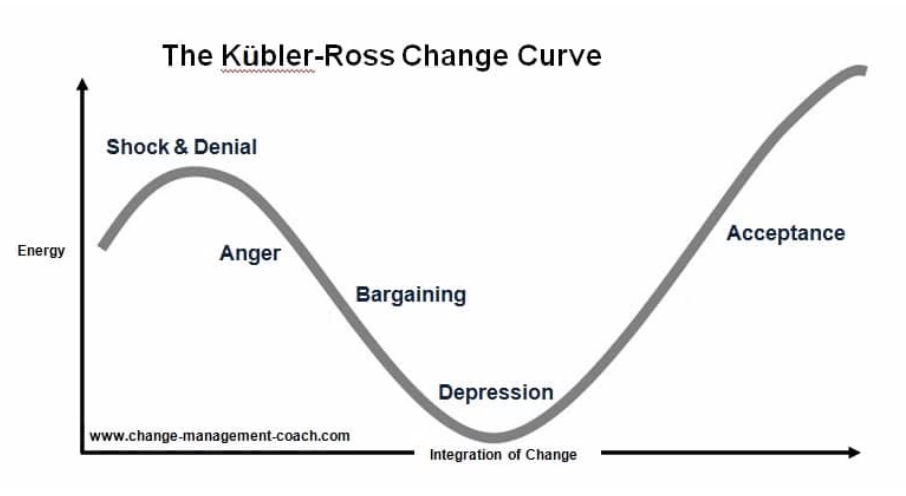
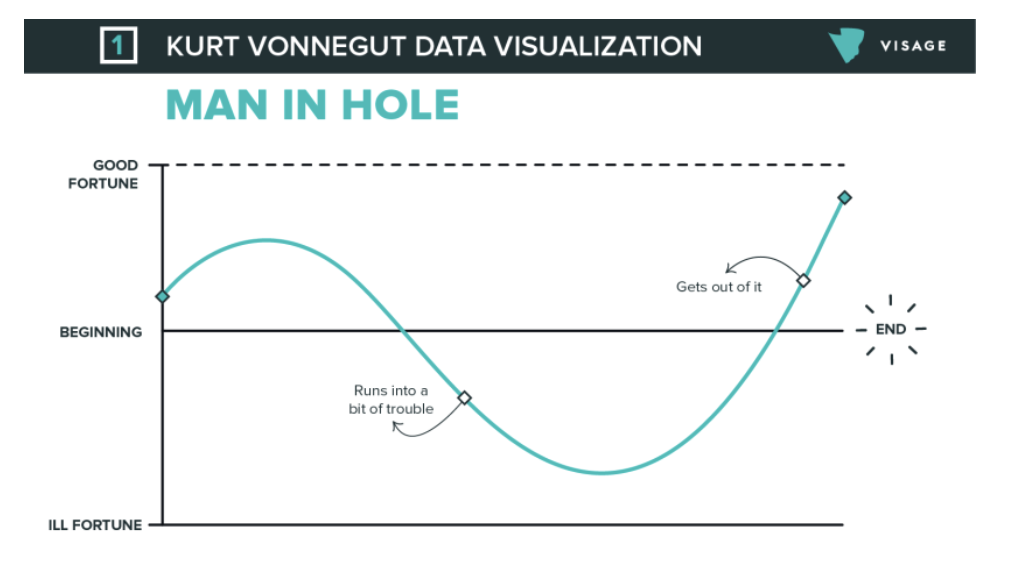
To help, the first part of the episode goes through how uncertainty affects everyone’s mindset. I share what some authors like Elizabeth Kubler-Ross and Kurt Vonnegut have observed about these reactions change over time. By understanding them, we’ll hopefully cycle through these emotions more quickly. 


Peter Drucker said we shouldn’t scale back at times like this, but to make investments that “enable a business to make its future. That, in the last analysis, is what planning for uncertainty means.” So having dealt with how we respond to uncertainty as humans, I devote the rest of this episode to how we can respond as marketers.

I talk about investments we can make around planning, doing, analyzing and improving processes. I share resources that have helped me during crises so the way I market fits with new outside realities. Hopefully it helps propel you to act in a way that you can look back on with pride when it’s all over.

People/Products/Ideas Mentioned:

Mr. Micawber from Charles Dickens’ “David Copperfield”

Pandora’s Box

Andrea Bassi, co-author of “Tackling Complexity”

Apollo 13

The Shawshank Redemption among other ‘Man in Hole’ movies

Craig Ferguson final “Late Late Show” monologue

SWOT analysis

Porter Five Forces Model

Business Model Canvas popularized by Alex Osterwalder and Ash Maurya

Anzoff Matrix

“An Astronaut’s Guide to Life on Earth” by Chris Hadfield

Mark Schaefer’s Content Shock

Shell Oil’s There Is No Alternative (TINA) Scenario Planning

Dr Flint McGlaughlin, Founder MECLabs, on marketers using their art to help others in crisis. 

Reboot:

Go find another group who would benefit from clarity on their strengths and ways to express their value to their audience.


you are the main character
credit: Bev Acton Illustration

Episode 18: Top Paid Media Changes in 2019

In any given year, there are a lot of changes in paid media. The pace of change in 2019 was every bit as brisk as in previous years. For the third year in a row, we assembling a panel to look back at a shortlist of the changes that are the most significant. Then we weigh their impact on B2B companies and what can be done either to minimize downside or capitalize on the upside. Our Panel this time features PPC professionals Olga Gladycheva as well as Pierre Levasseur and yours truly

The changes we discussed in the show include:

  • LinkedIn adds Interest targeting options 
  • Apple Rollout of ITP 2.x 
  • Google Ads sunsets average position 
  • Click share metric available in Search Campaigns 
  • Google Ads Audit rules inside the desktop editor 
  • Microsoft Ads rebrands, keeps pace with Google Ads and deepens features brought by their relationship with LinkedIn   
  • Google rolls out Campaign-level conversions 
  • Google softens Location settings to people REGULARLY in my target 
  • Google puts same-meaning words in an auction on all types of Keyword matches 
  • Google Ads Retiring Accelerated Delivery 
  • Google lowers ‘15 conversions in 30-days’ as a minimum bar for Target CPA
  • Google Analytics reports both dates of click and date of conversion

People/Products Mentioned:

Reboot:

Stay to the end of the episode to hear our picks for the best and worst changes of the year.